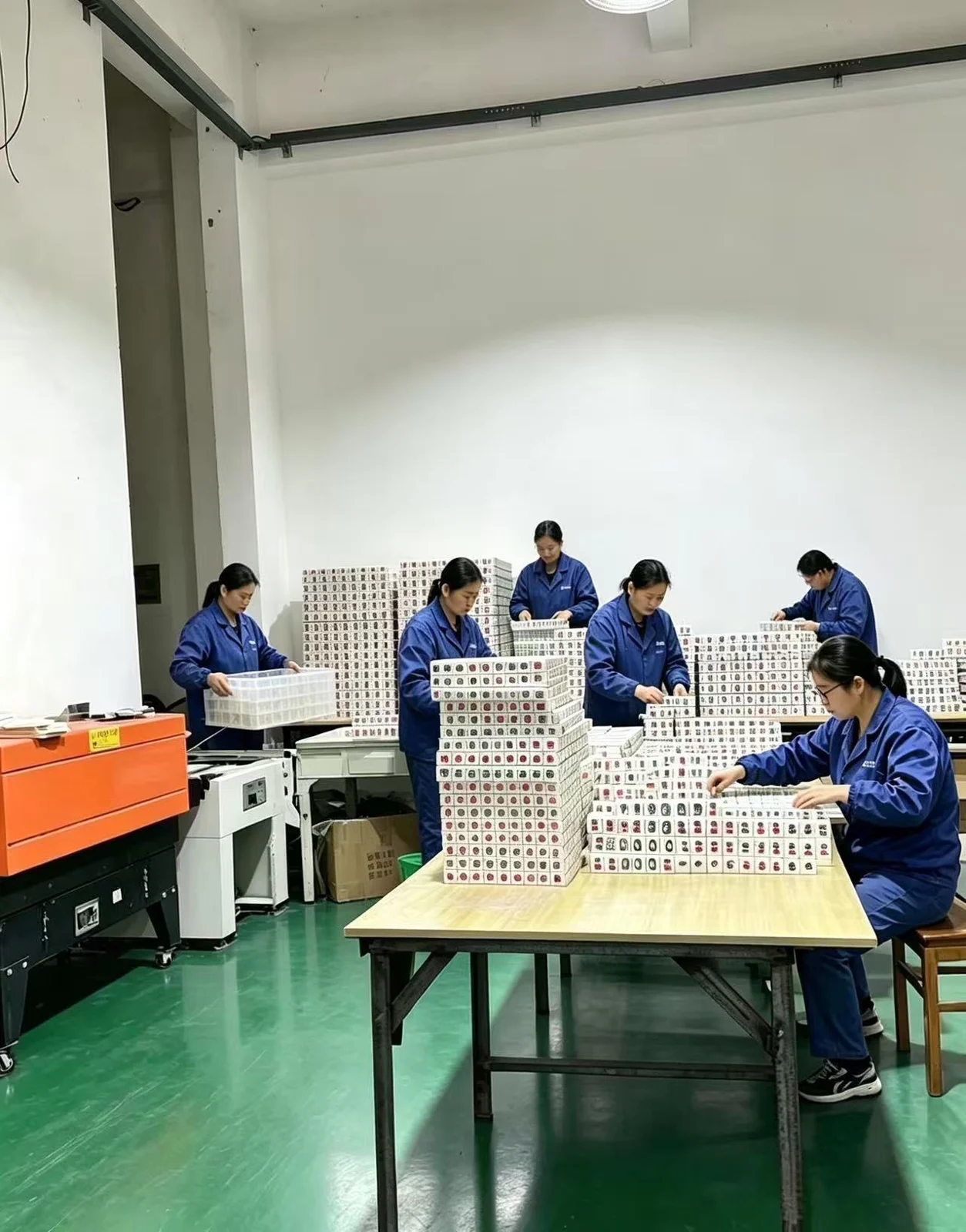
Review factory-supplied production photographs and the specifications to approve for custom tiles, mats, racks, bags and boxes. OEM and ODM projects proceed from a written brief to a physical sample and agreed production checks.
These owner-supplied photographs show equipment and work areas connected with acrylic tiles and accessories, table mats, printing and packaging. They support the process descriptions on this page; your product specification, inspection criteria and required documents are still confirmed for each order.
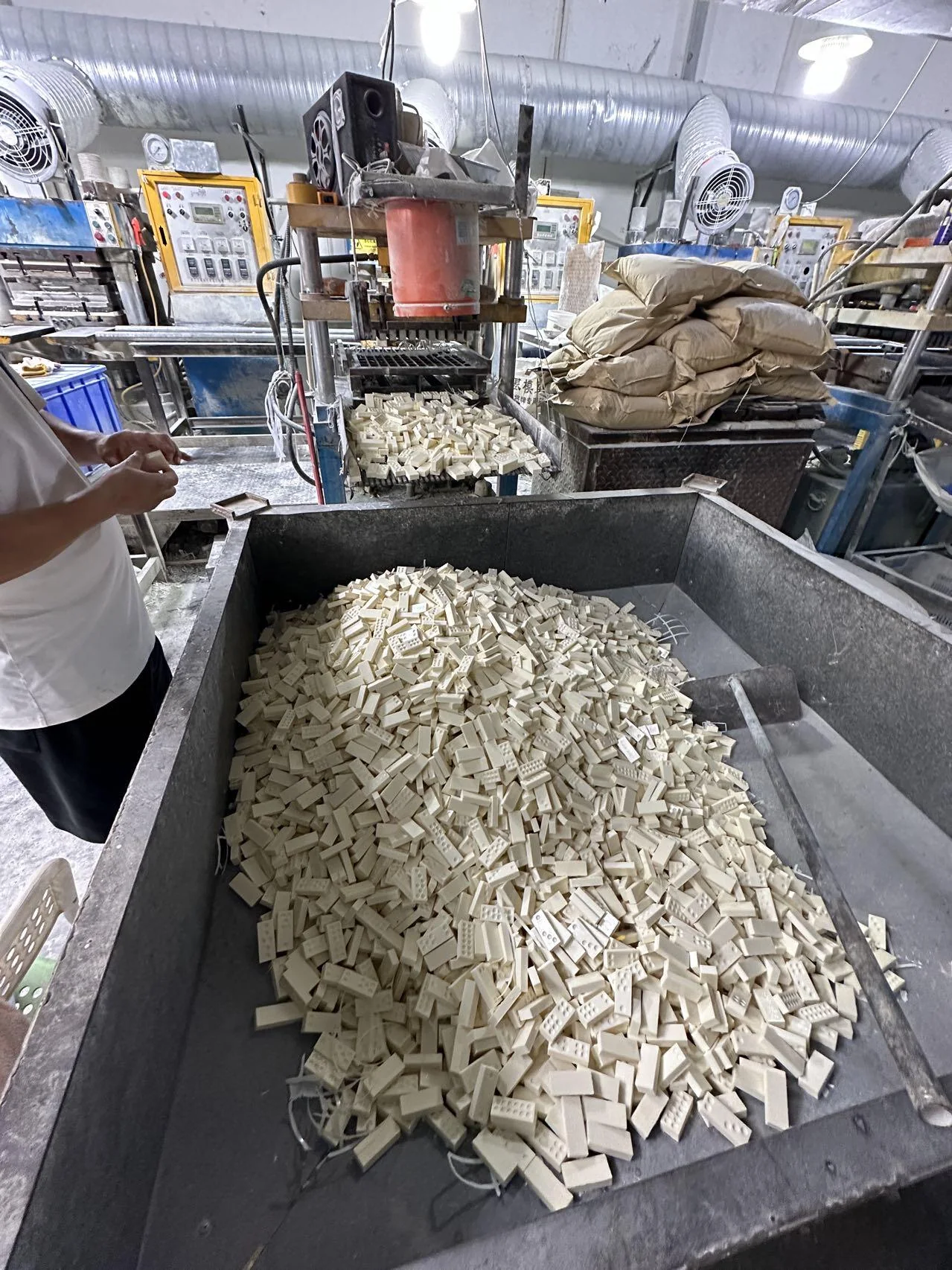
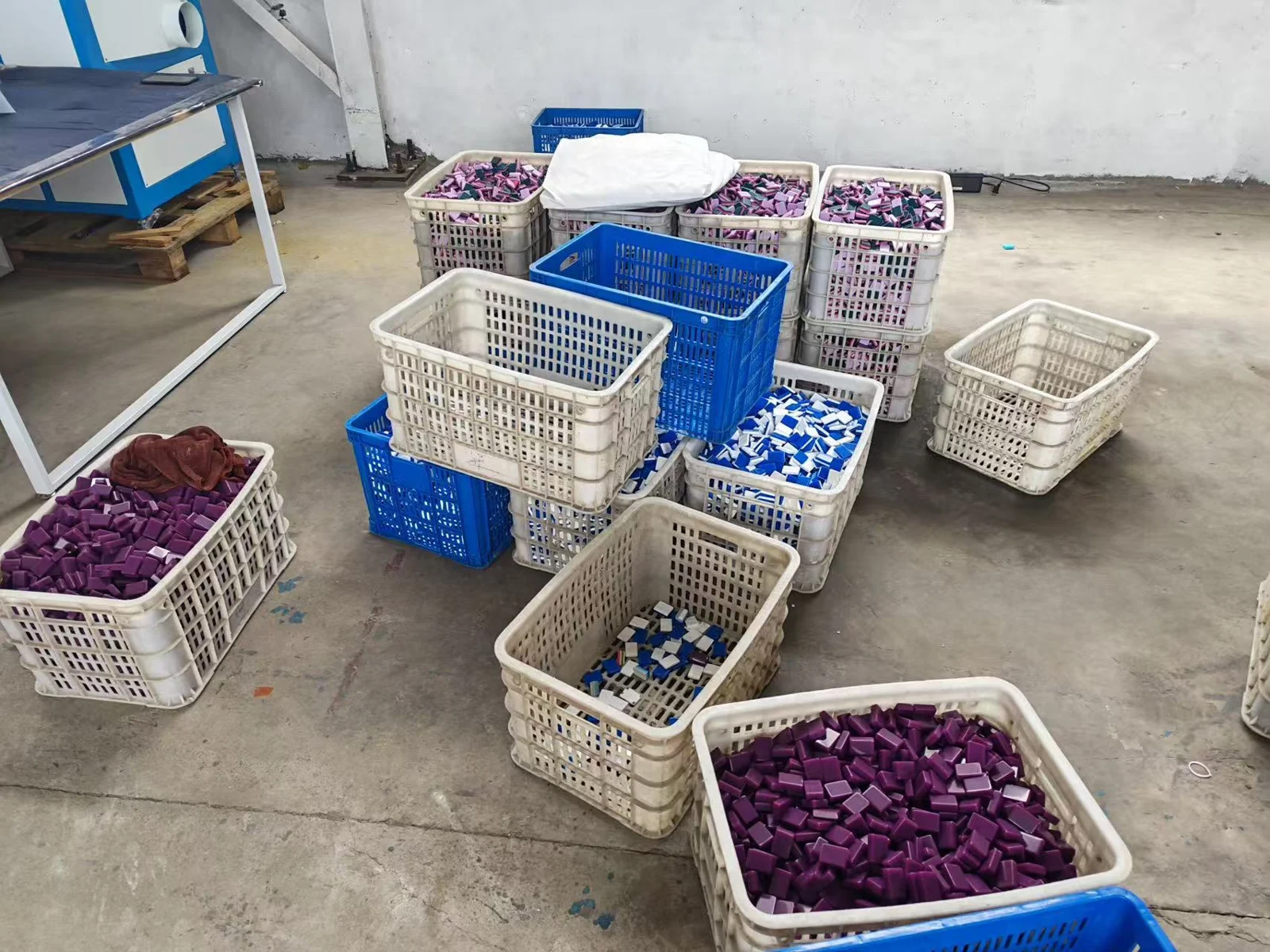
Newly formed tile blanks are collected beside the molding equipment before later finishing and printing.
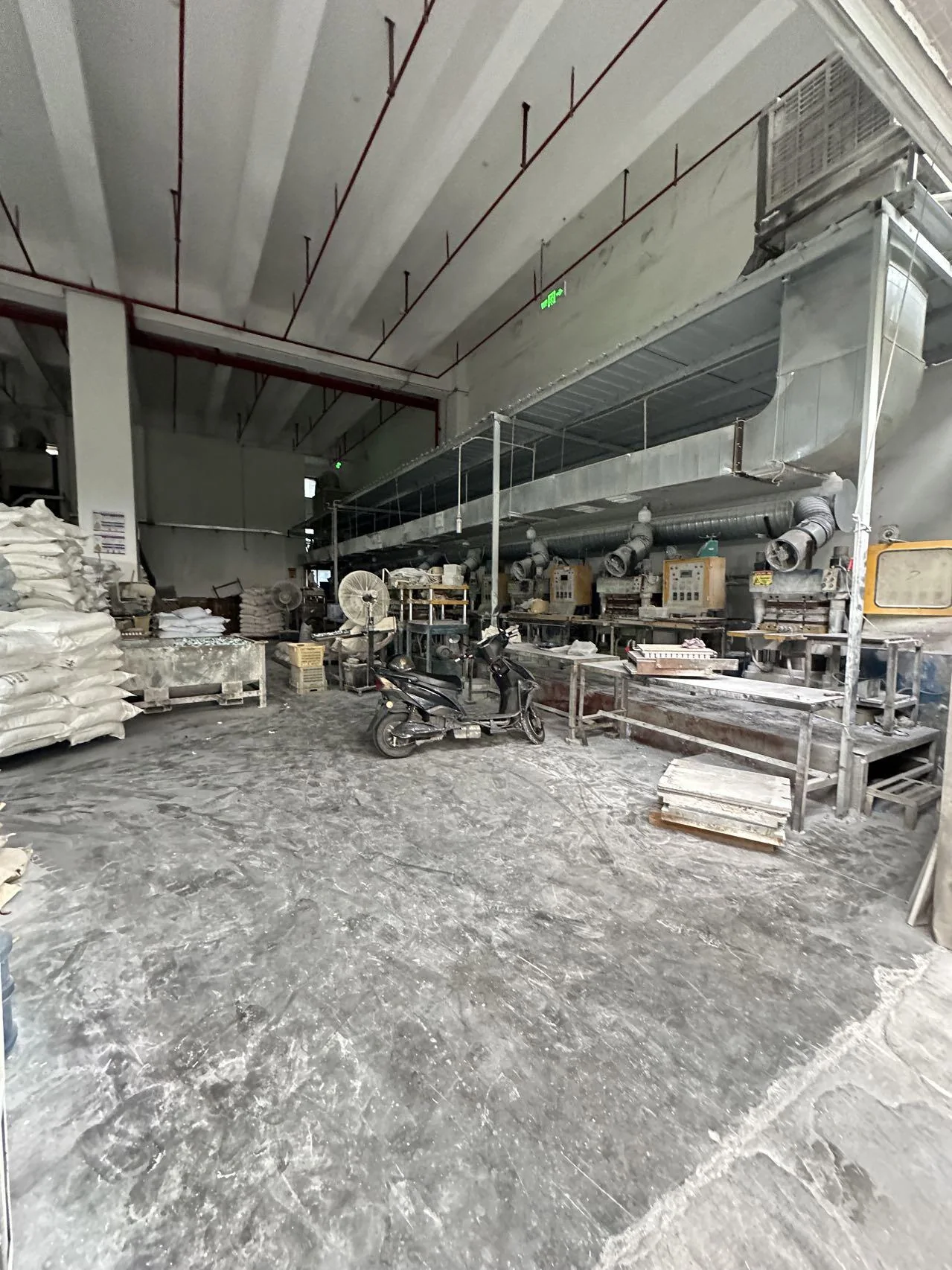
Tile molding workshop
The molding area shows multiple presses, raw-material storage and working space used for tile production.
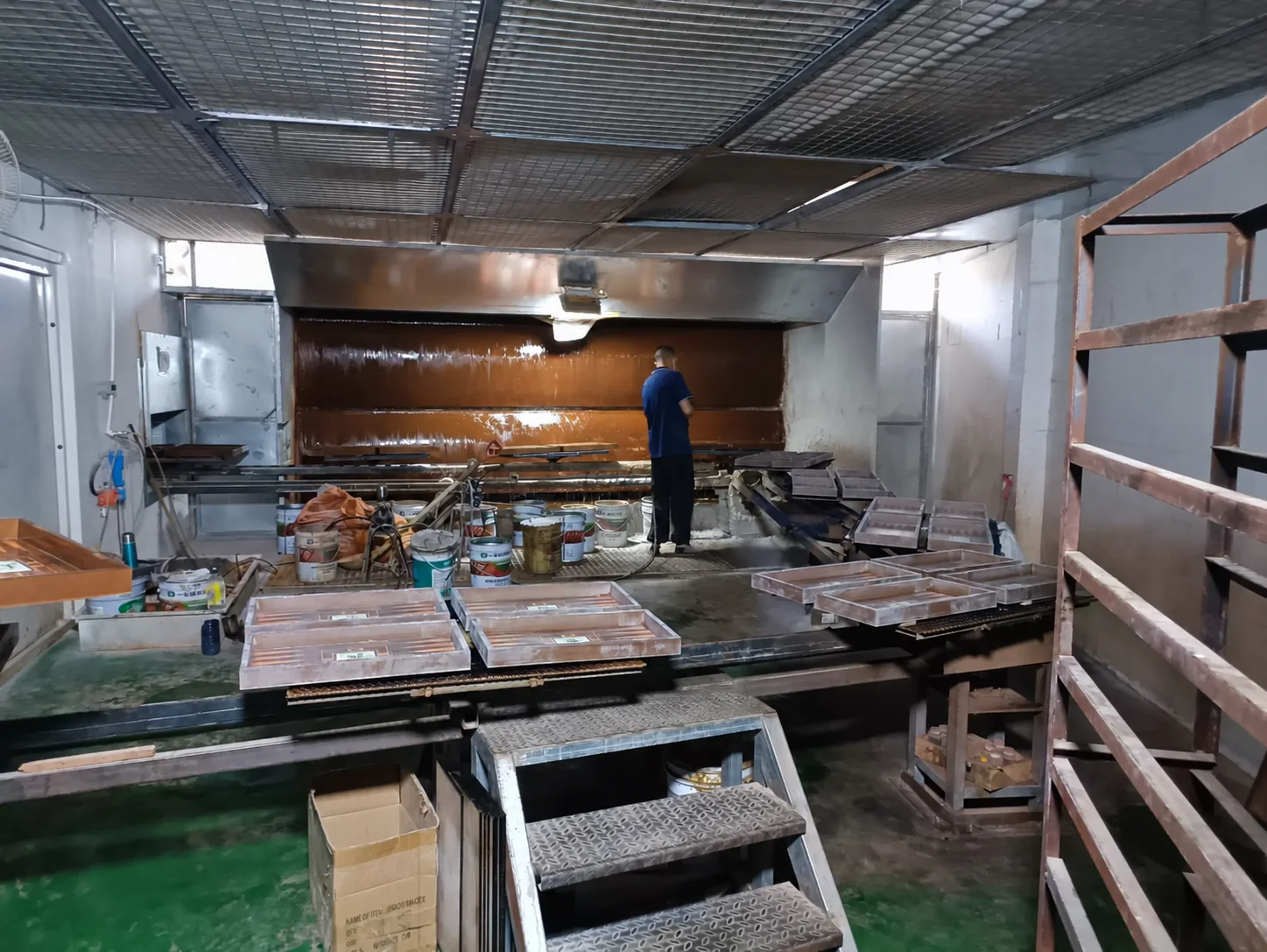
Acrylic surface finishing
Transparent accessory components are arranged at a ventilated finishing station.
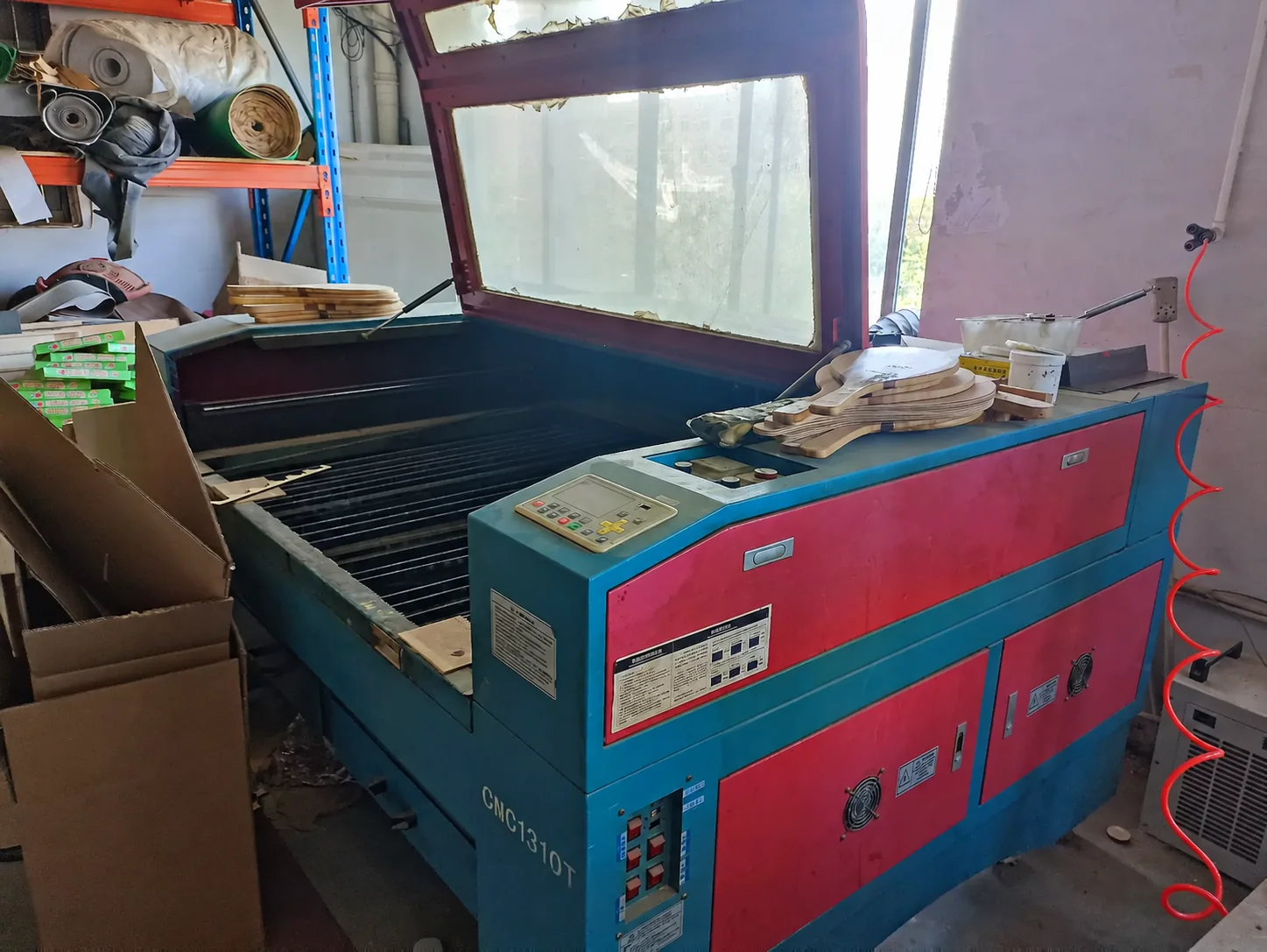
Laser cutting equipment
A laser cutting station supports shaped accessory components from supplied or approved drawings.
02
Table mats
Mat component preparation
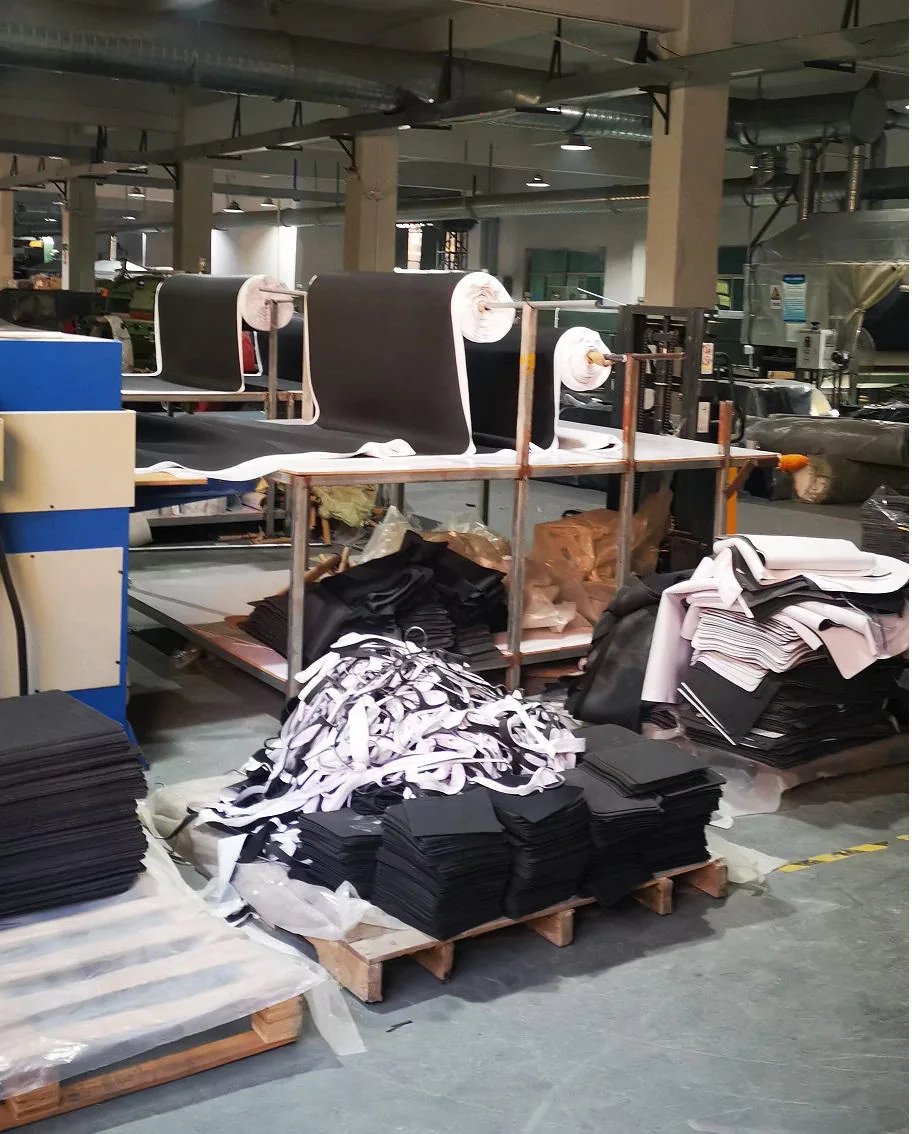
Cut mat components and roll material are grouped near the production equipment for the next operation.
Mat material inventory
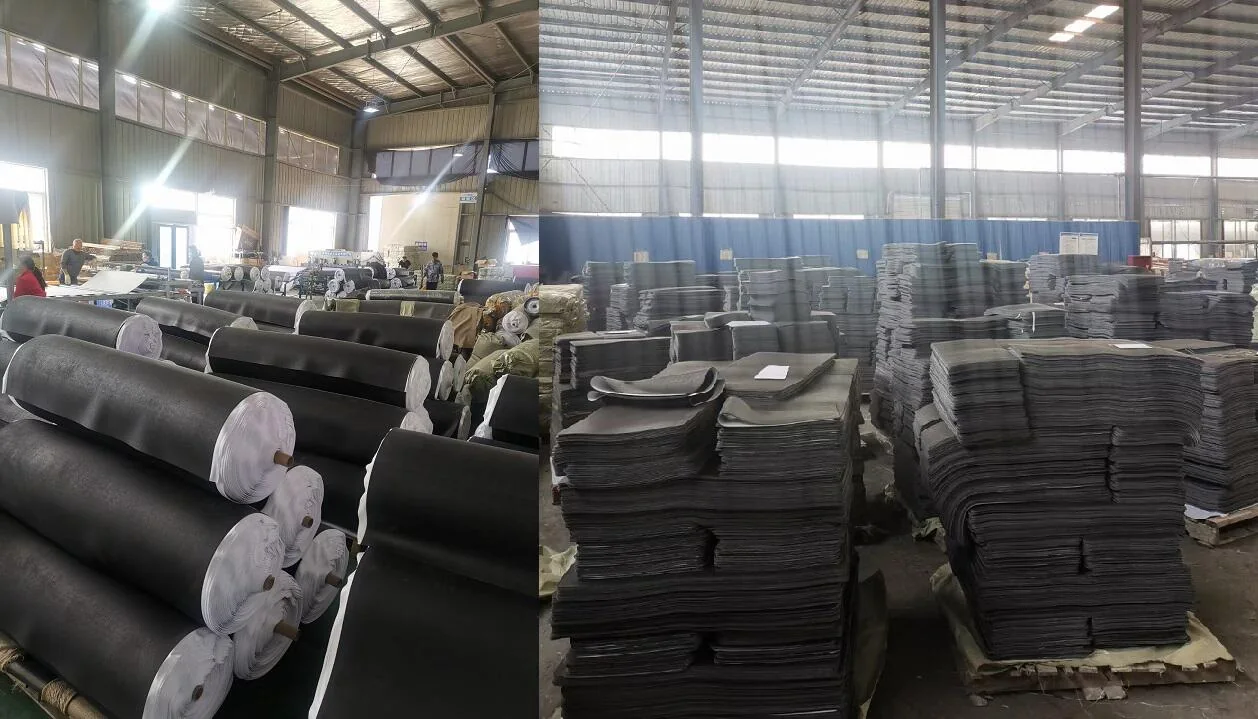
Rolls and stacked cut pieces show the material stages used before printing, edge finishing and packing.
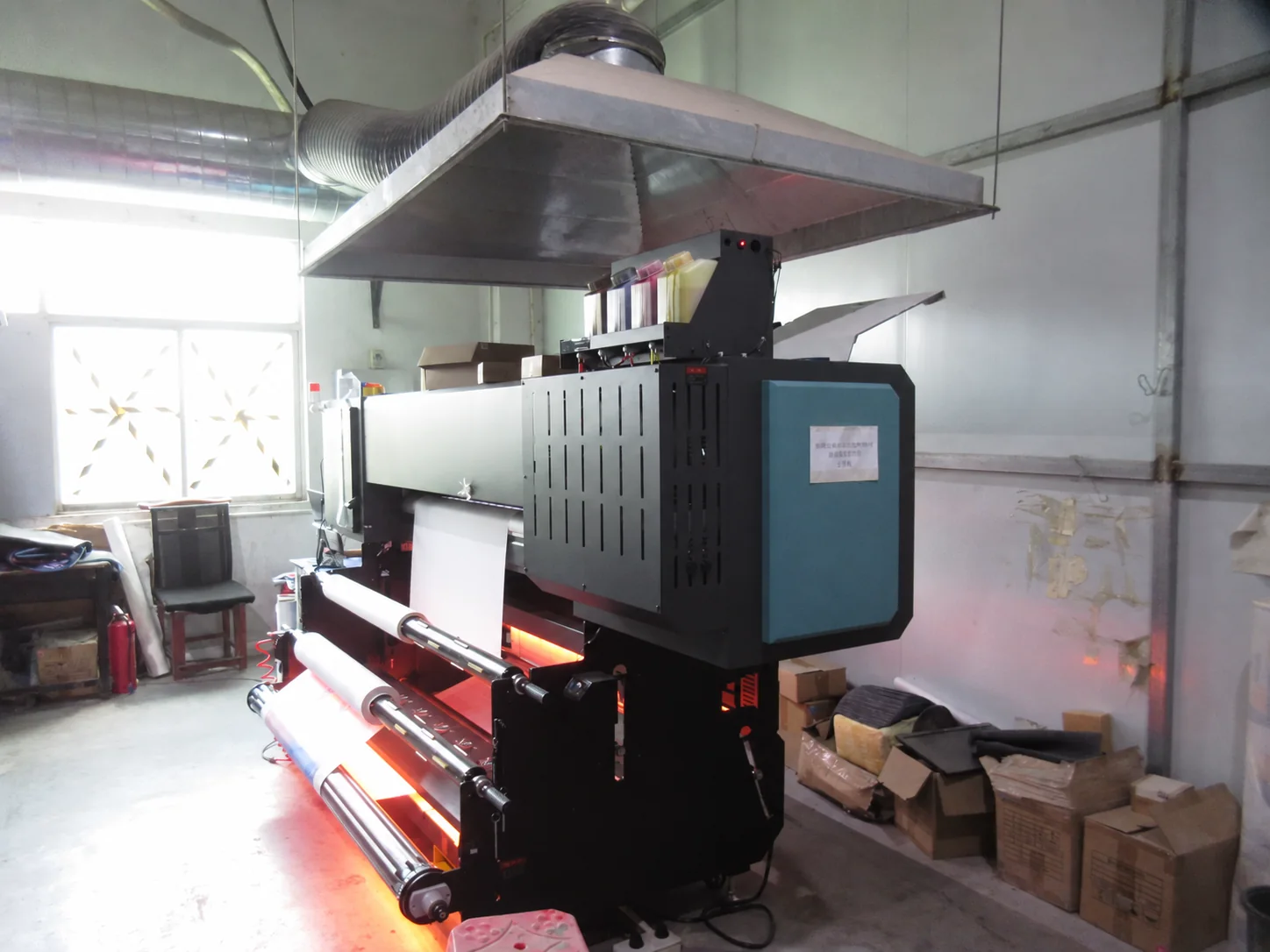
Wide-format printing room
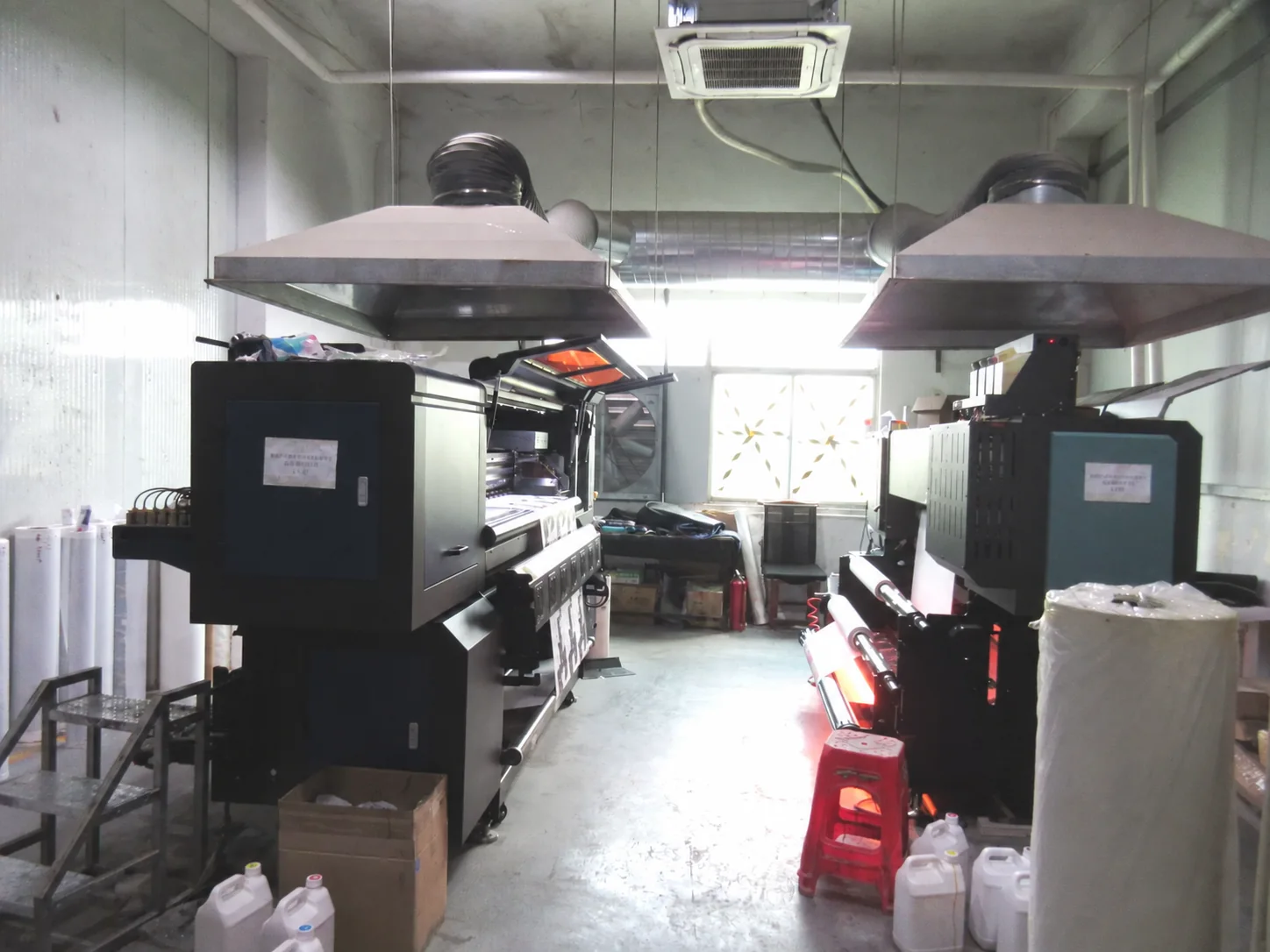
Two enclosed printing lines are shown with local extraction and rolls of printable material.
Edge sewing station
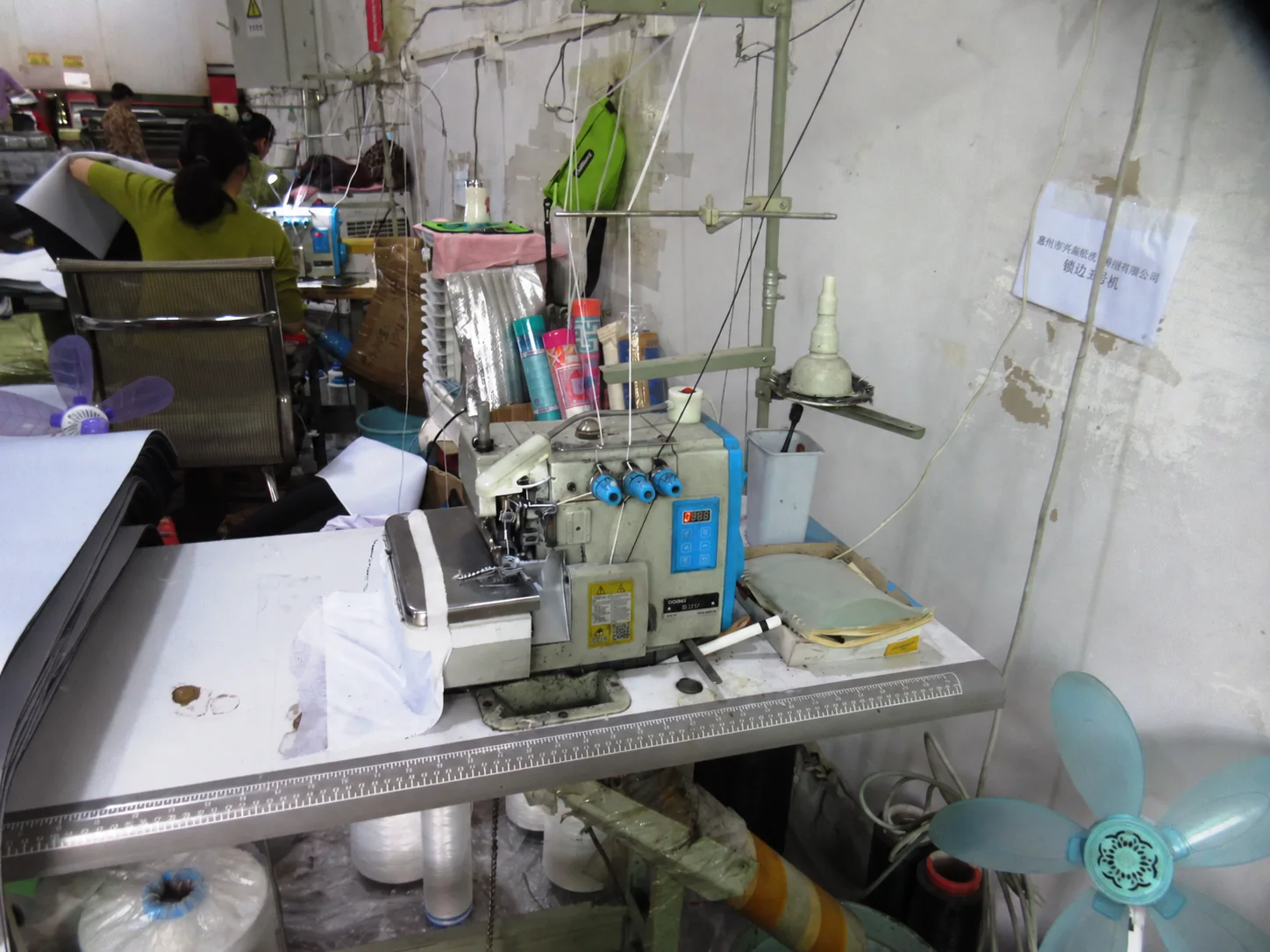
A sewing station supports the single-sided stitched-edge finish specified for custom table mats.
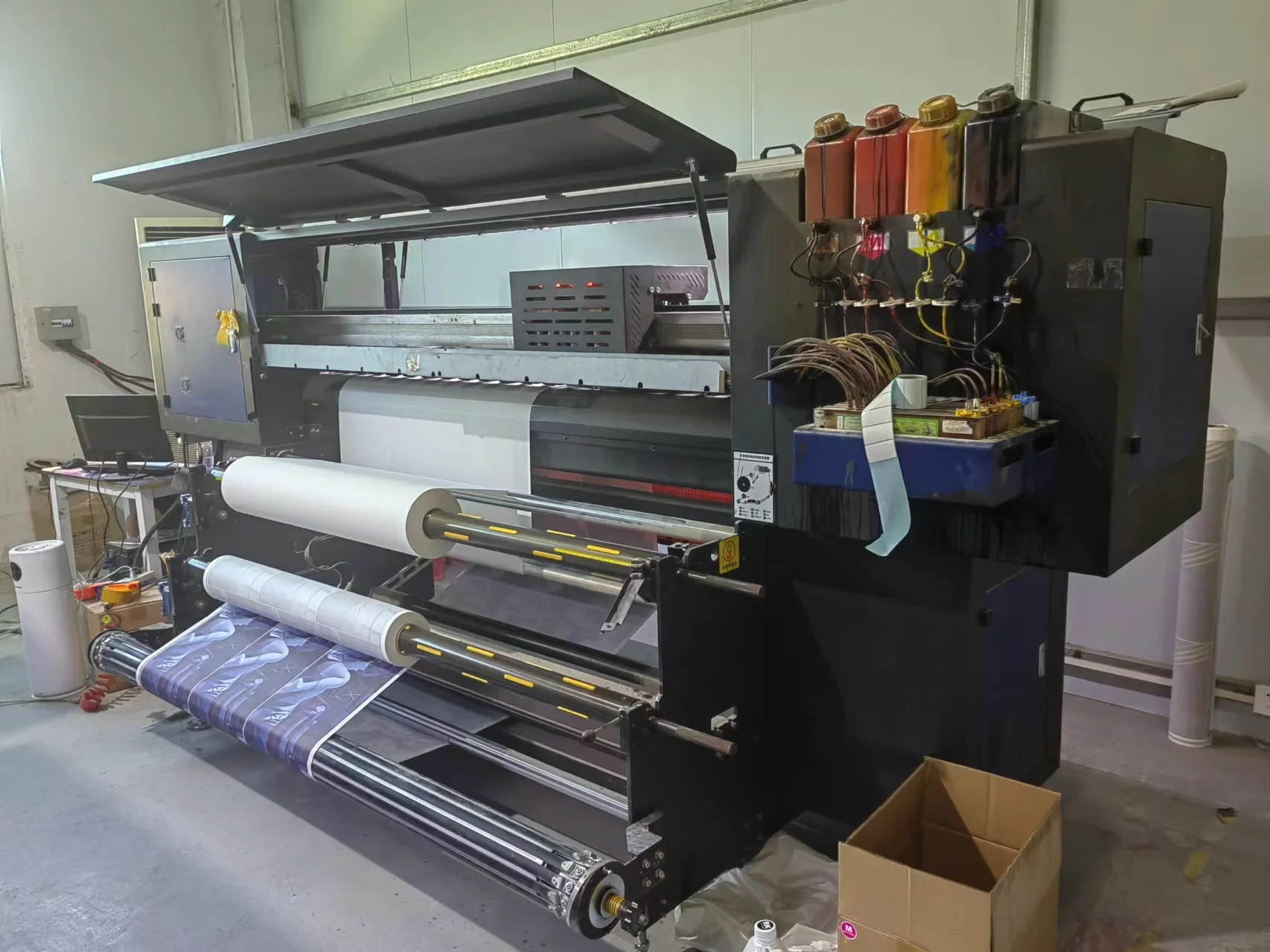
Surface printing equipment
A close factory view of roll-fed equipment used to place printed artwork on flexible material.
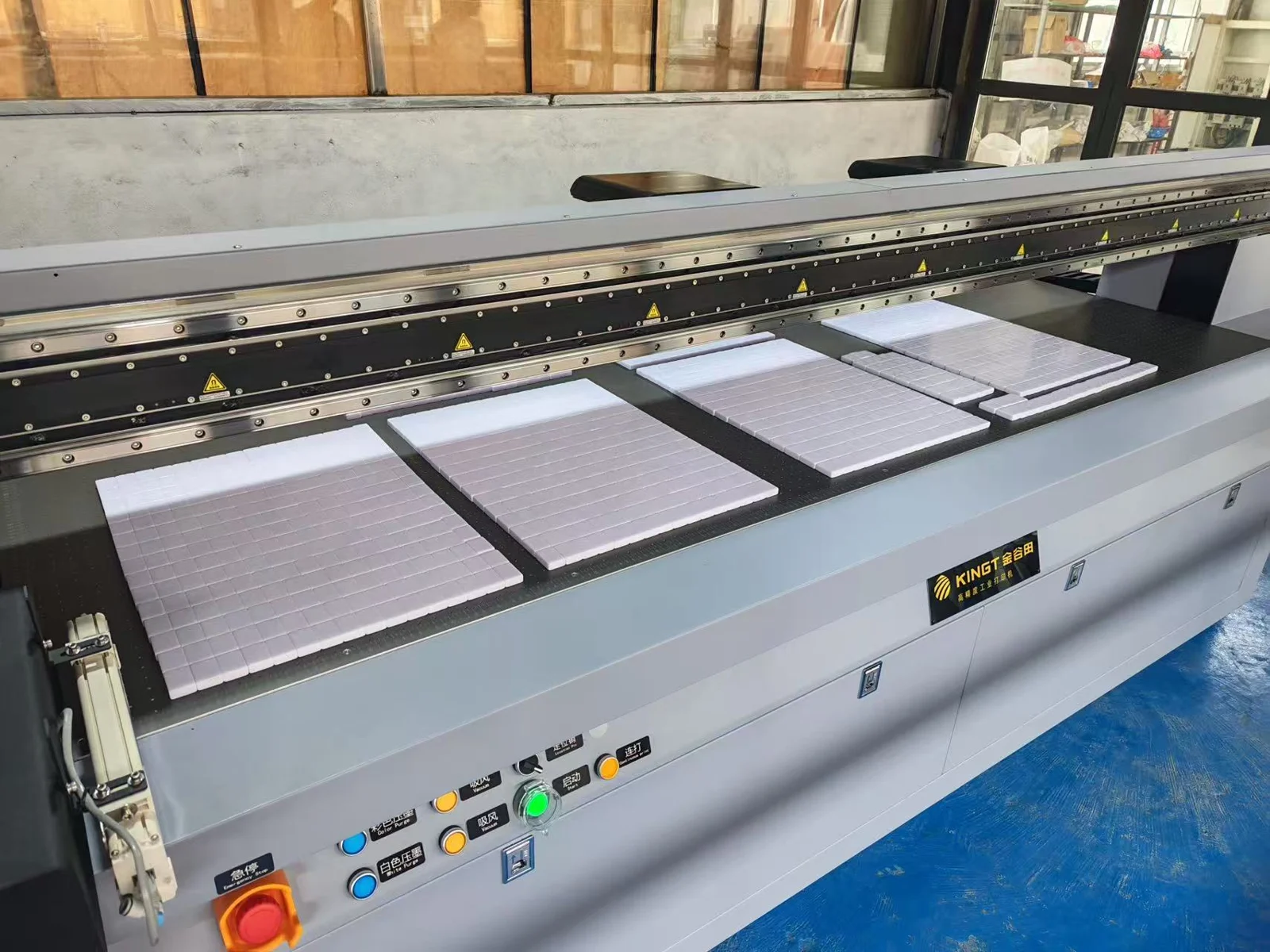
Digital print production
Large-format printing equipment handles roll-fed artwork before finishing and cut preparation.
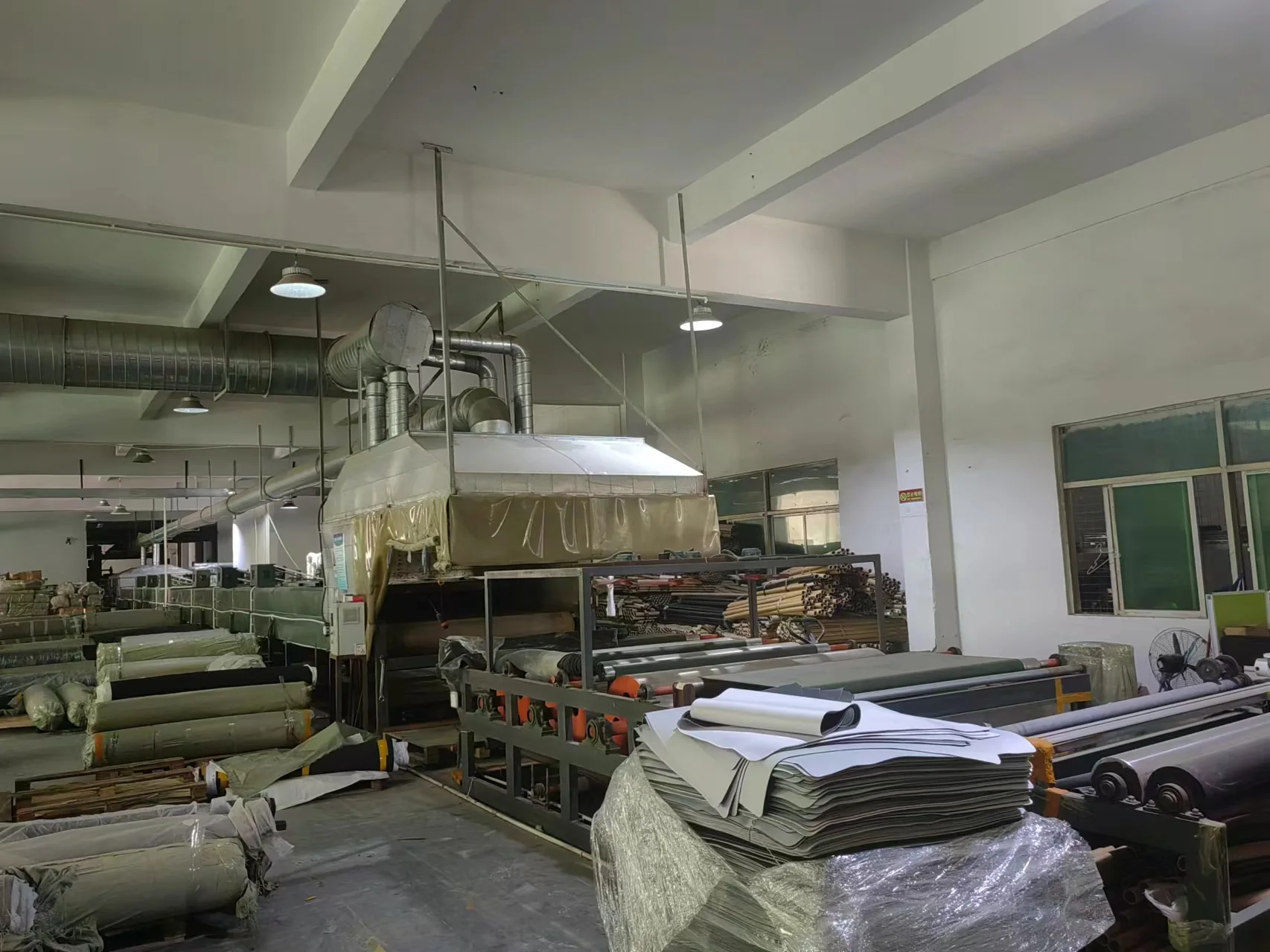
Material finishing line
A continuous line moves sheet material through a controlled finishing stage before cutting.
03
Packaging & converting
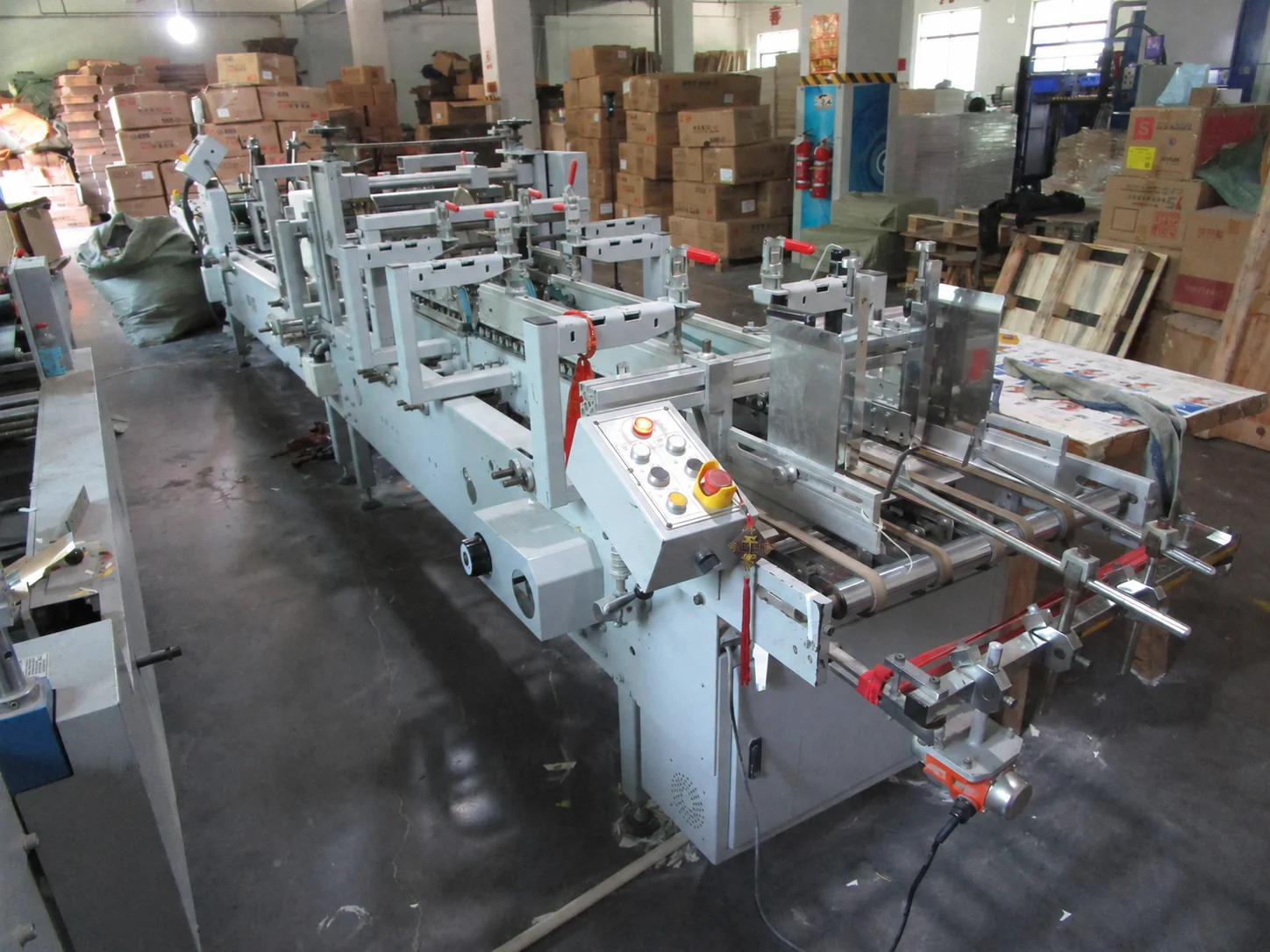
Packaging converting equipment
A factory-supplied view of converting equipment, control hardware and nearby carton storage.
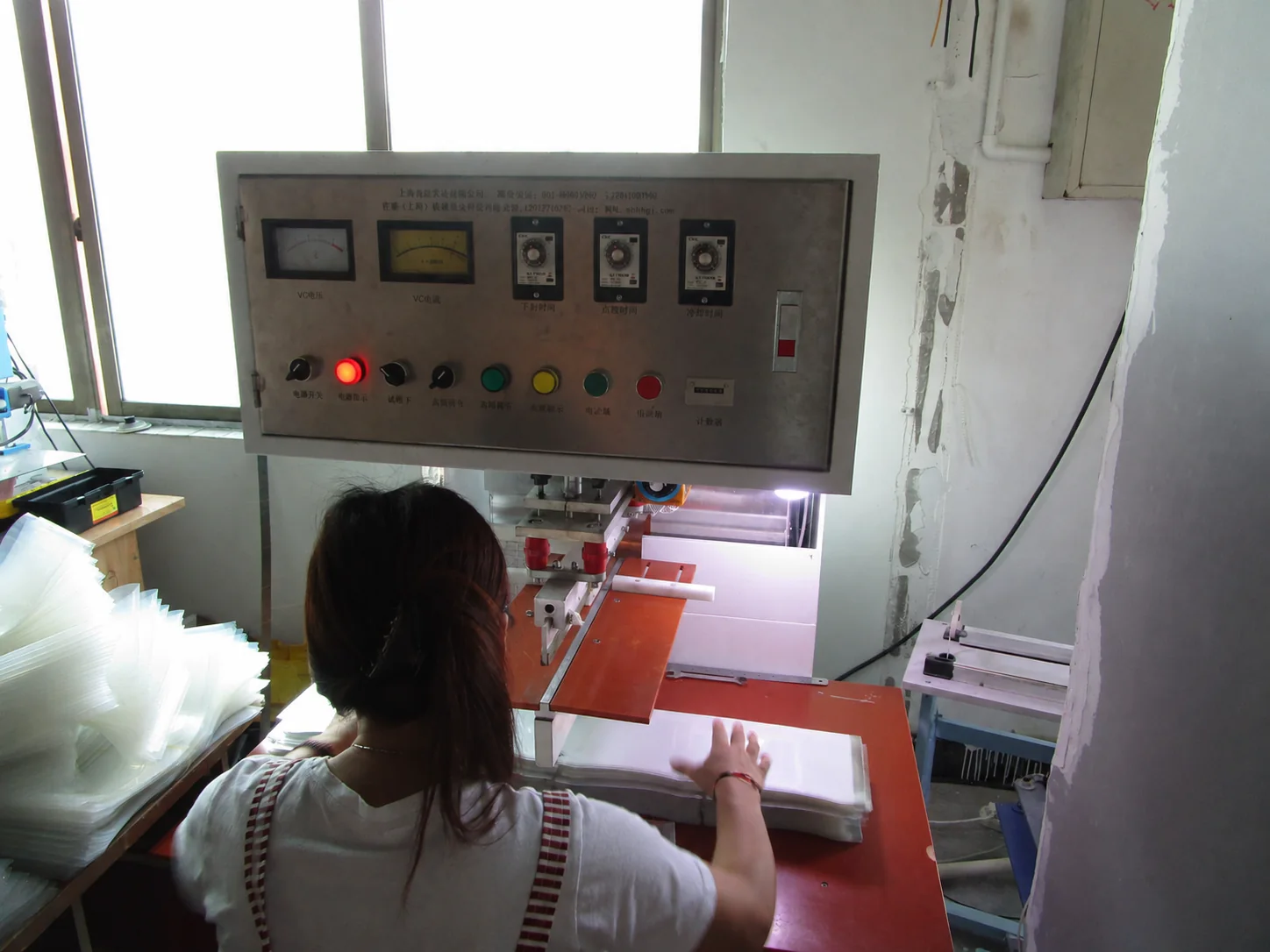
Sheet processing station
An operator positions sheet material at a production station before the next processing step.
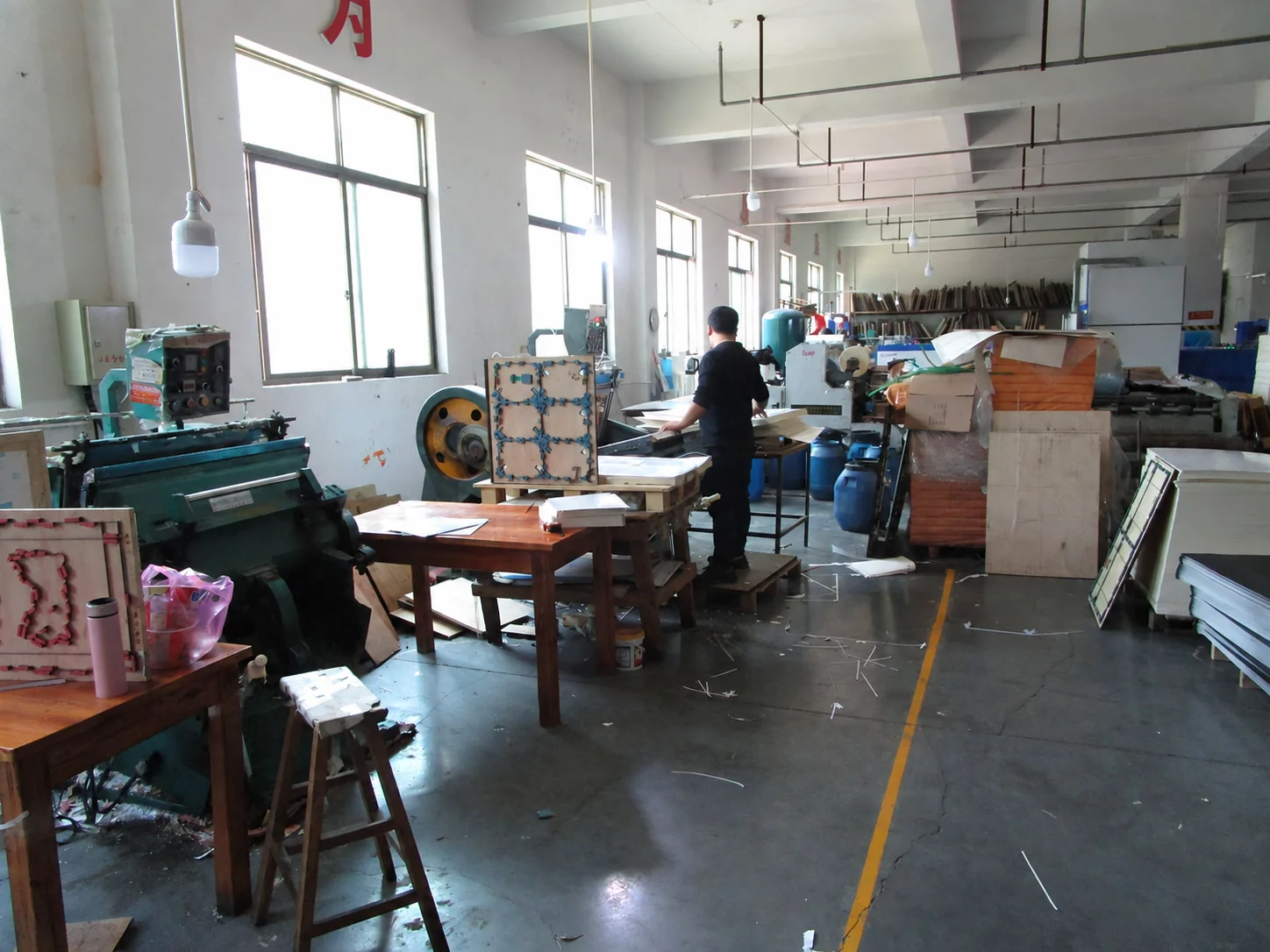
Converting workshop
A wider view shows worktables, presses, materials and the movement space around the equipment.
What these photographs establish
They make the relevant workshop processes visible. They do not by themselves state legal ownership, a production-capacity figure, certification status or an inspection result. Include any documentation your company needs in the inquiry.
Production visibility that supports a decision
Factory photographs show tile preparation, equipment, component handling and packing. Use this overview to ask informed questions about your own specification. A process photograph does not establish a particular capacity, certification or inspection result; request project-specific documentation when your buying requirements call for it.
Make your tile specification unambiguous
For custom mahjong tiles, define face artwork, back artwork, dimensions and the full inventory. Review artwork orientation, color references, surface finish and back consistency in the sample. Keep one approved revision so design and production conversations refer to the same specification.
Approve the complete product, not isolated pieces
Racks must fit the tiles. Storage must fit the racks and the agreed tile count. Mats must suit the intended table. Coordinating five product categories allows you to review those relationships together before approving a wholesale order. Accessory customization covers colors; any other requested change needs separate feasibility review.
FROM PLAYER QUESTIONS TO BETTER PRODUCTS
Your customers ask. Your collection should answer.
Real questions from public discussions, translated into practical sourcing decisions for brands, retailers and teaching businesses.
Illustrative scene
Will a premium set actually feel better to my customers?
Price alone does not establish play quality. For a wholesale American mahjong collection, compare tile readability, consistent backs, rack fit and the feel of the complete setup. Ask your mahjong manufacturer to review these points on a physical sample before treating a decorative finish as a premium benefit.
How can I prevent tile and rack compatibility problems?
Specify tile width, height and thickness alongside the usable rack channel. Test a complete hand and wall with the actual rack and pusher. When you source custom mahjong tiles and racks together, a coordinated sample lets you review the interface before ordering separate components in bulk.
Should I choose bold artwork or easier-to-read tiles?
Start with the people who will use your product. A distinctive back can carry your brand while familiar, high-contrast faces keep the game easy to follow. Our OEM / ODM tile scope includes front artwork, back artwork and dimensions, so you can discuss visual identity and usability as separate decisions.
What should my beginner-friendly wholesale bundle contain?
Agree a named tile inventory, four compatible racks, storage and the selected accessories. Our coordinated range includes tiles, mats, racks, bags and boxes, with chips, dice and an instruction booklet included in the agreed kit. Clearly distinguish your booklet from the current annual NMJL card; the annual card is not included in our offer.
Sources reviewed 11 September 2026. This is a qualitative selection of recurring questions, not a search-volume ranking, product endorsement or independent test.
The workshop photographs and film supplied by our factory team show real working areas. Use them to start a practical conversation about your product, then ask for order-specific samples and records.
Production scope
Connect the process to your order
Discuss tile faces, backs and dimensions alongside mats, racks, bags and boxes. Identify which operations and components are relevant to the proposed construction. A photograph shows a process at a moment in time; confirm the actual manufacturing scope and schedule for your collection.
Ask for clear views of the tile face, back and edges, an itemized contents check and the packed arrangement. For fit questions, use the actual rack, mat and storage sample. Record dimensions and acceptance criteria so the comparison is more useful than a general request for premium quality.
Confirm the inspection plan, defect handling and documents you require before production. Any testing or certification needs to apply to the actual product and destination requirements. Request relevant evidence for your order; workshop imagery alone does not establish a certification or production capacity.
Connect every question to your order. Useful evidence explains the proposed construction and inspection process, rather than relying on a broad claim of quality.
01
The product
Ask which materials, dimensions and finishes are proposed for your brief.
Compare them with the approved physical sample.
02
The process
Ask which shown operations apply to your project and how changes are recorded.
Confirm the relevant production scope and current schedule.
03
The acceptance plan
Describe the defects, measurements and documents that matter to your purchasing team.
Agree inspection criteria and handling of nonconforming goods in writing.
Get a focused OEM / ODM conversation about your American mahjong range. Share your product list, quantity per design, artwork status and destination. We can then discuss the sample scope, accessory fit and production schedule around your launch.