Choose OEM manufacturing for approved artwork, ODM development for a new collection, or private-label packaging. Define tiles, accessories, MOQ, sample approval and production scope in your brief.
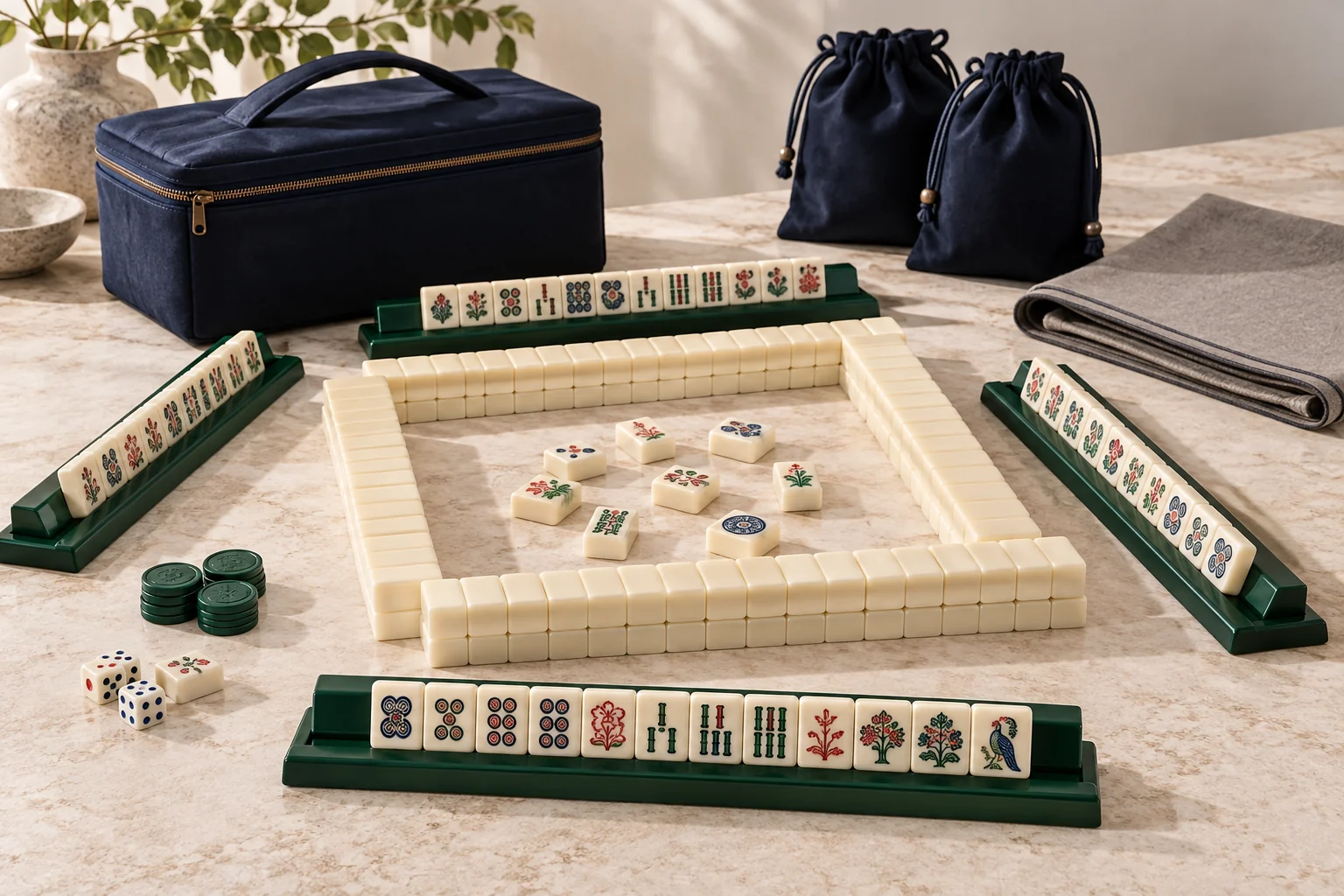
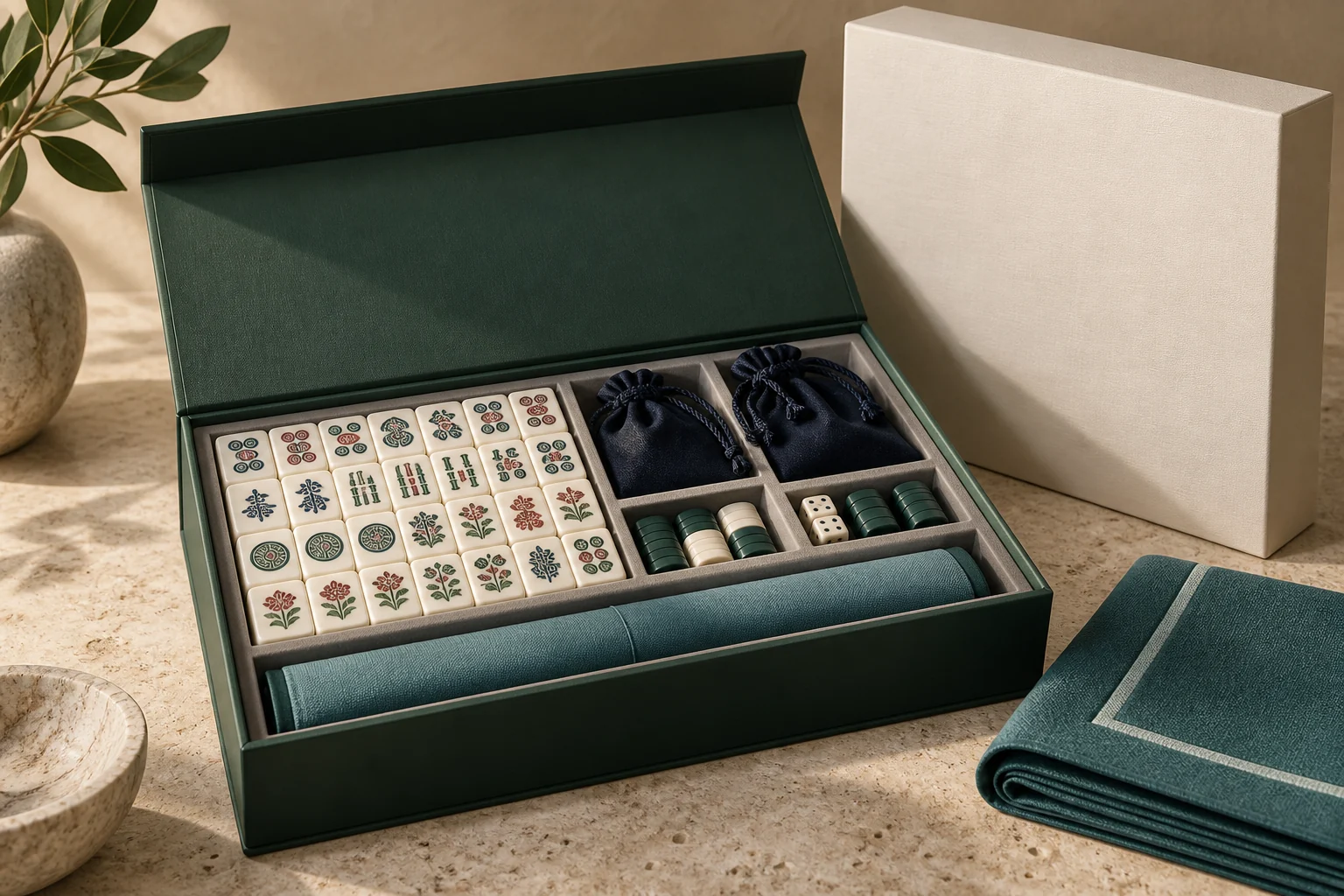
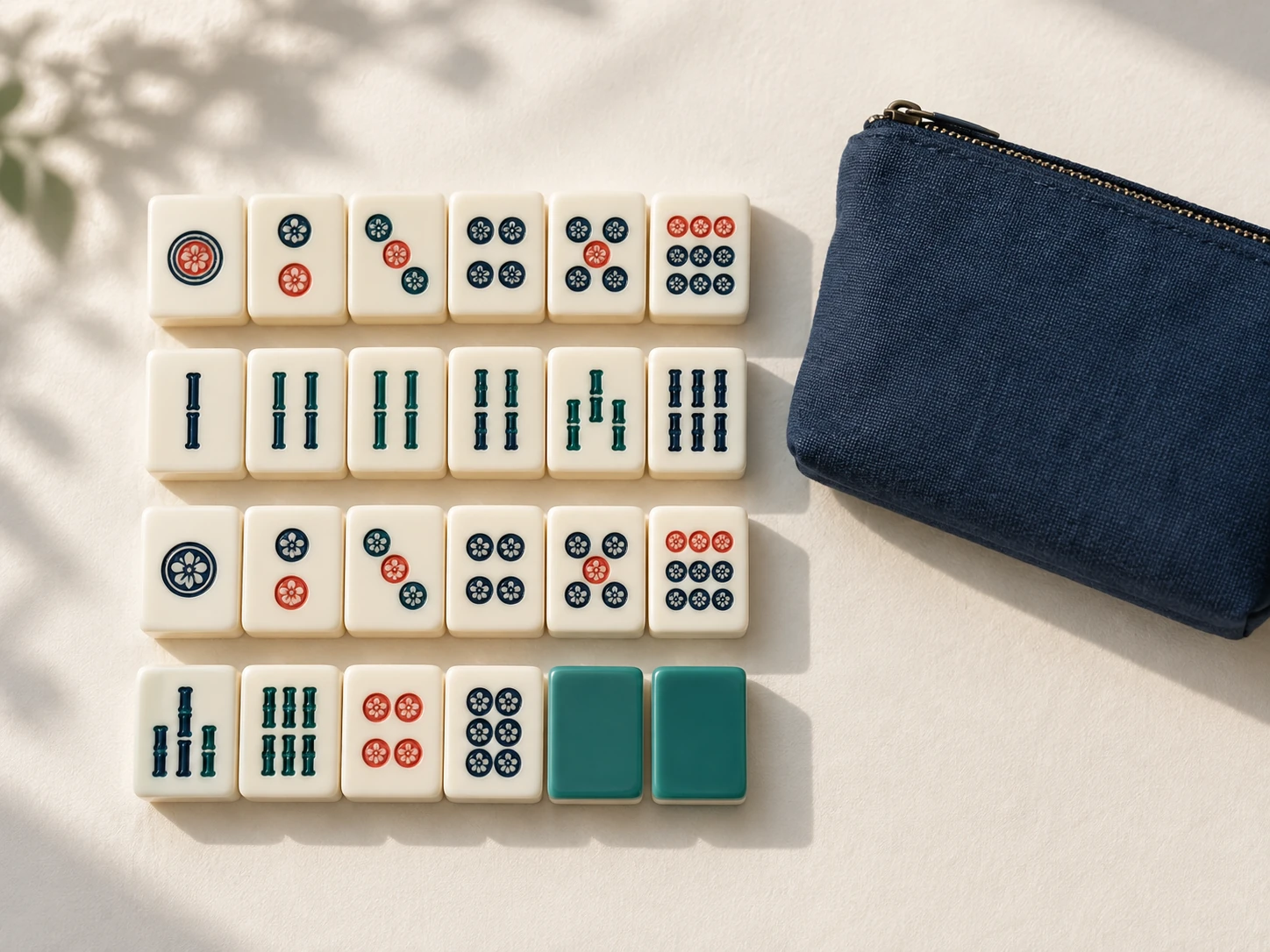
Order in-stock tiles, table mats, racks, bags or boxes individually or mix categories. A complete set includes all five categories. Half-custom and fully custom routes are also available. Specify quantities per category and design; the quotation confirms the purchasing unit, mixed-order allocation, color allocation and packaging scope.
Product category, quantity, audience, dimensions and destination.
Product confirmation
Confirm the individual category or set, purchasing unit, dimensions and included components.
Design confirmation
Agree artwork, color references, logo placement and the component list.
Sampling
Confirm sample scope, charges and the 25–30 day planning window.
Sample approval
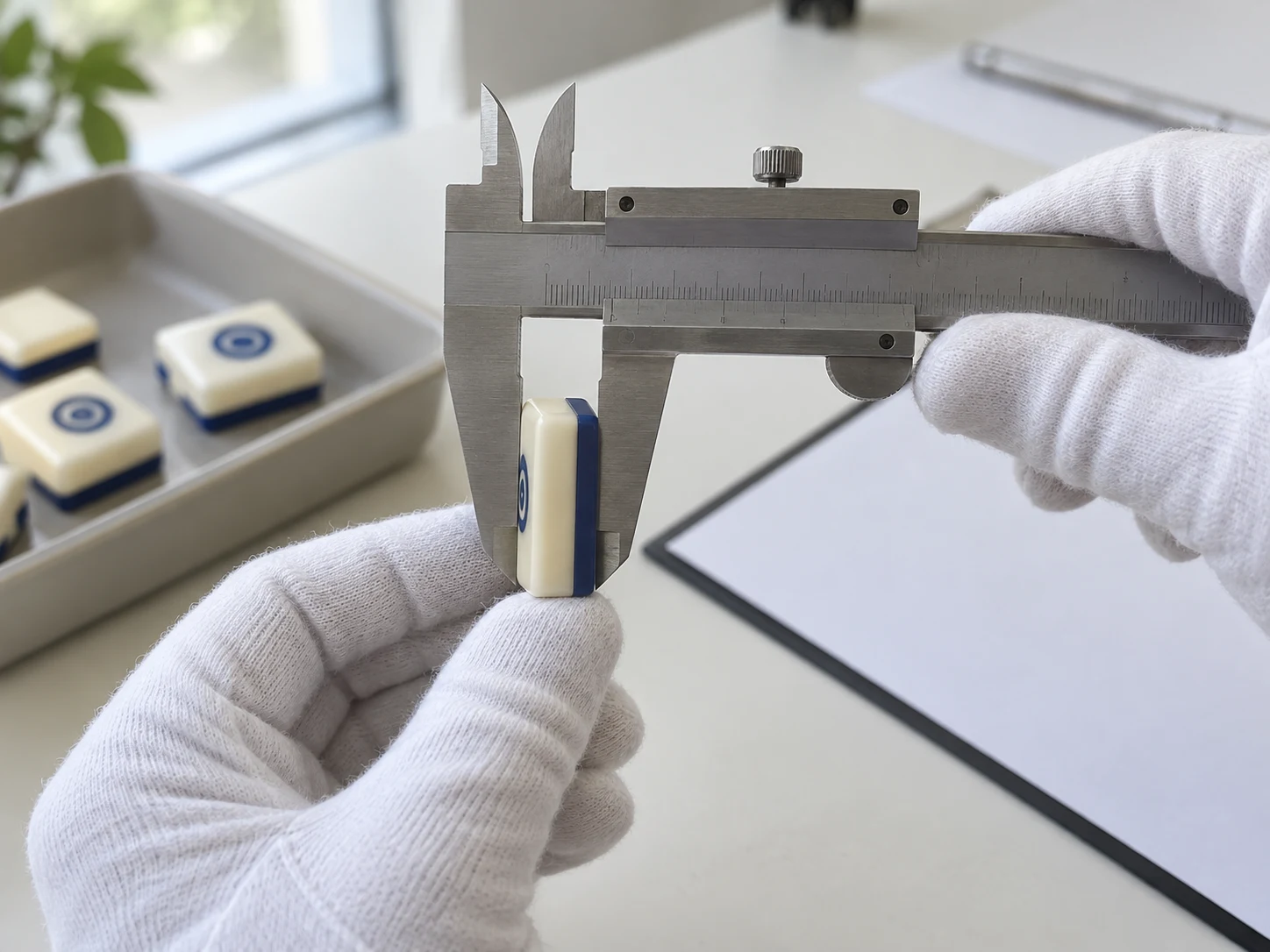
Record the physical sample, measurements, fit and final file versions.
Bulk production
Confirm the agreed start milestone and 30–40 day custom production plan.
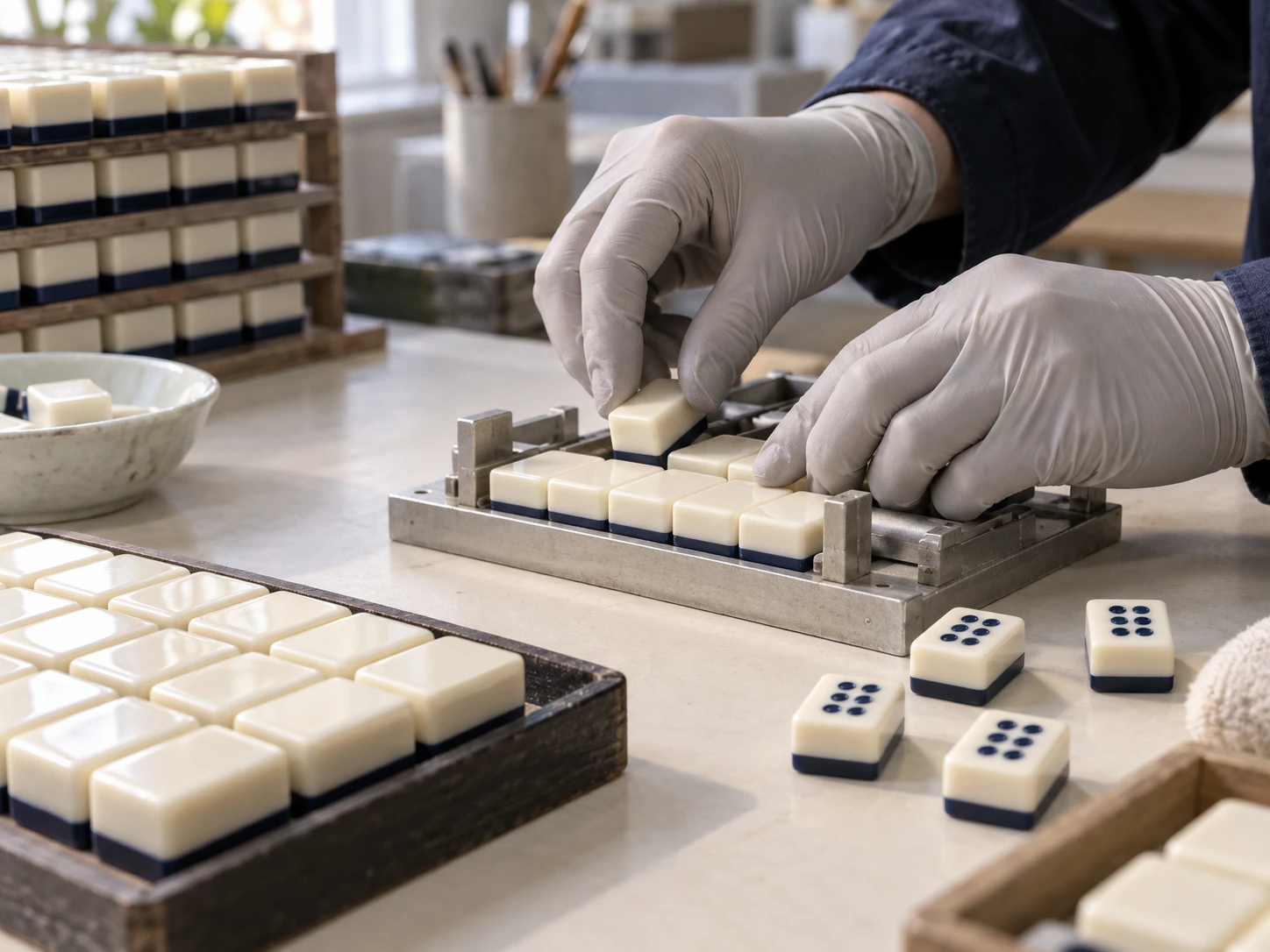
Quality control
Review the agreed inspection scope, acceptance criteria and evidence.
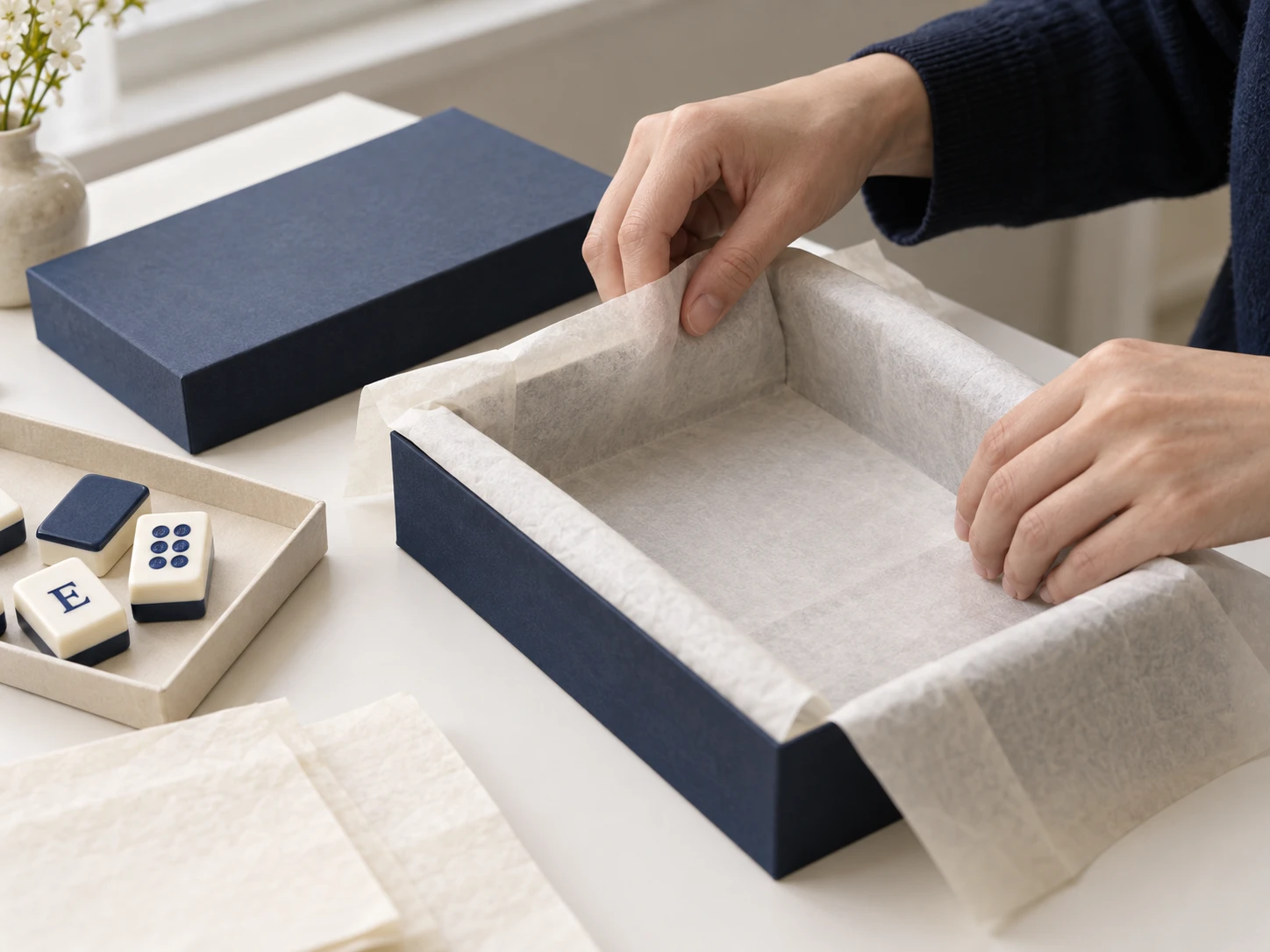
Packaging
Check complete contents, protective packing, labels and carton details.
Dispatch
Confirm sea, air or express, delivery responsibilities and transit time.
MOQ 100 for all product routes; mixed colors are supported. Sample revisions, approvals and transport are separate schedule inputs. Confirm all project-specific terms in writing.
Choose the level of development your brand needs. OEM starts with your supplied design; ODM develops an original direction with you. In both cases, the physical sample connects the artwork to the finished product.
01 / Design handoff
Make the brief production-ready
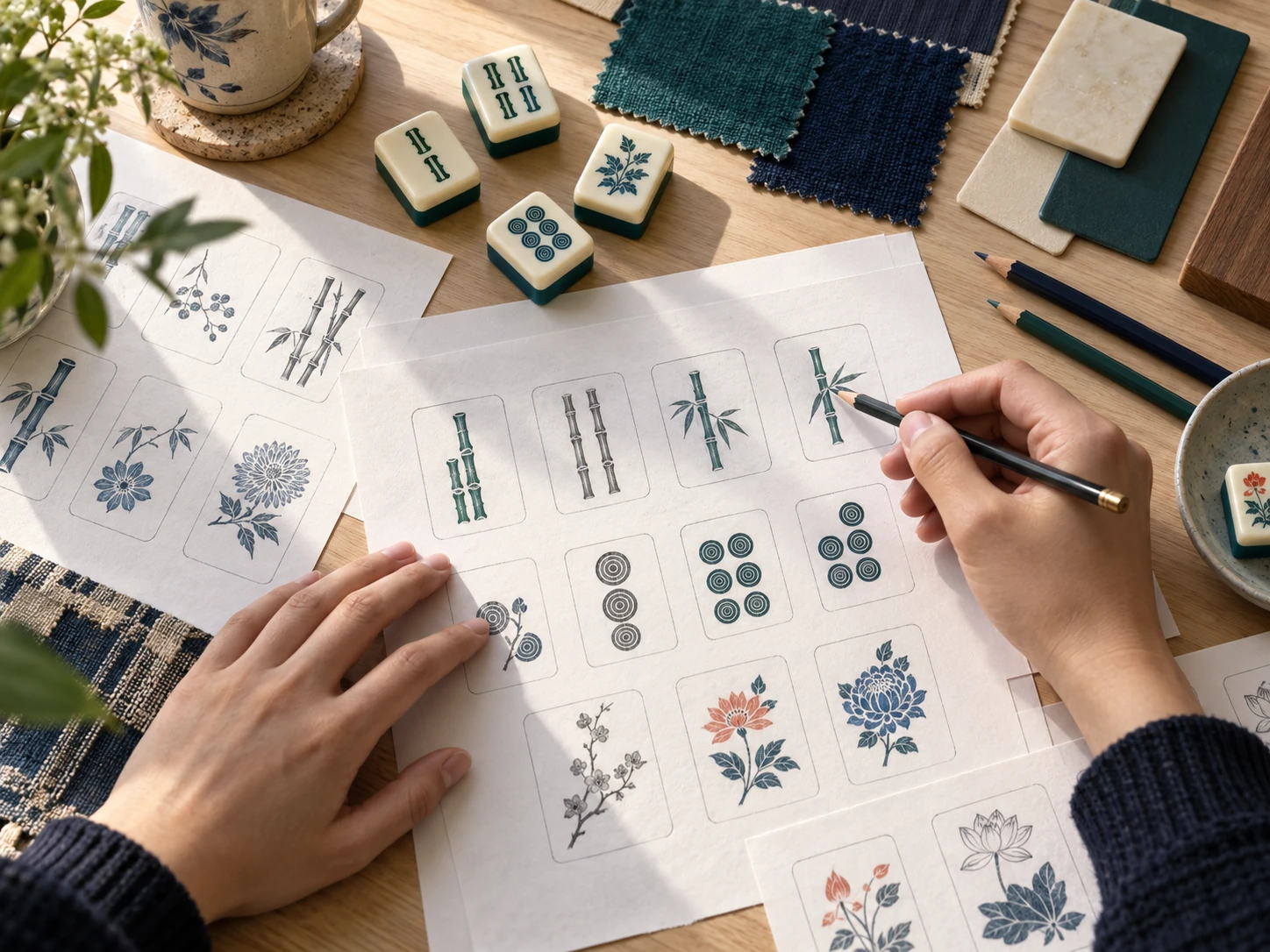
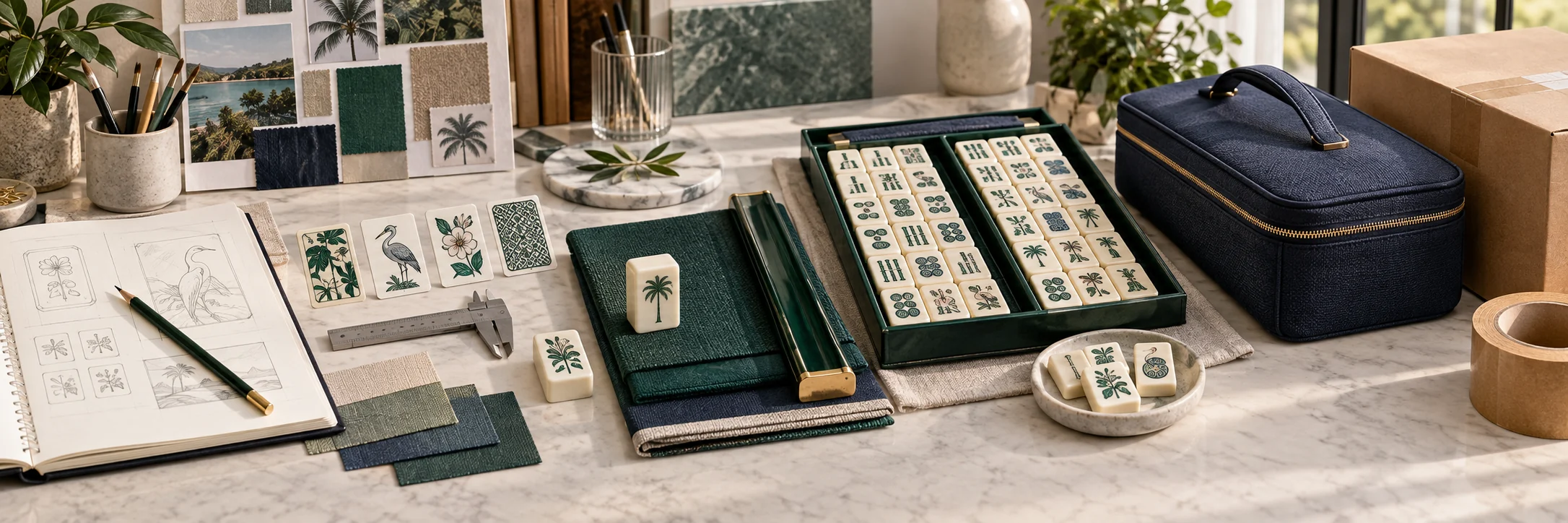
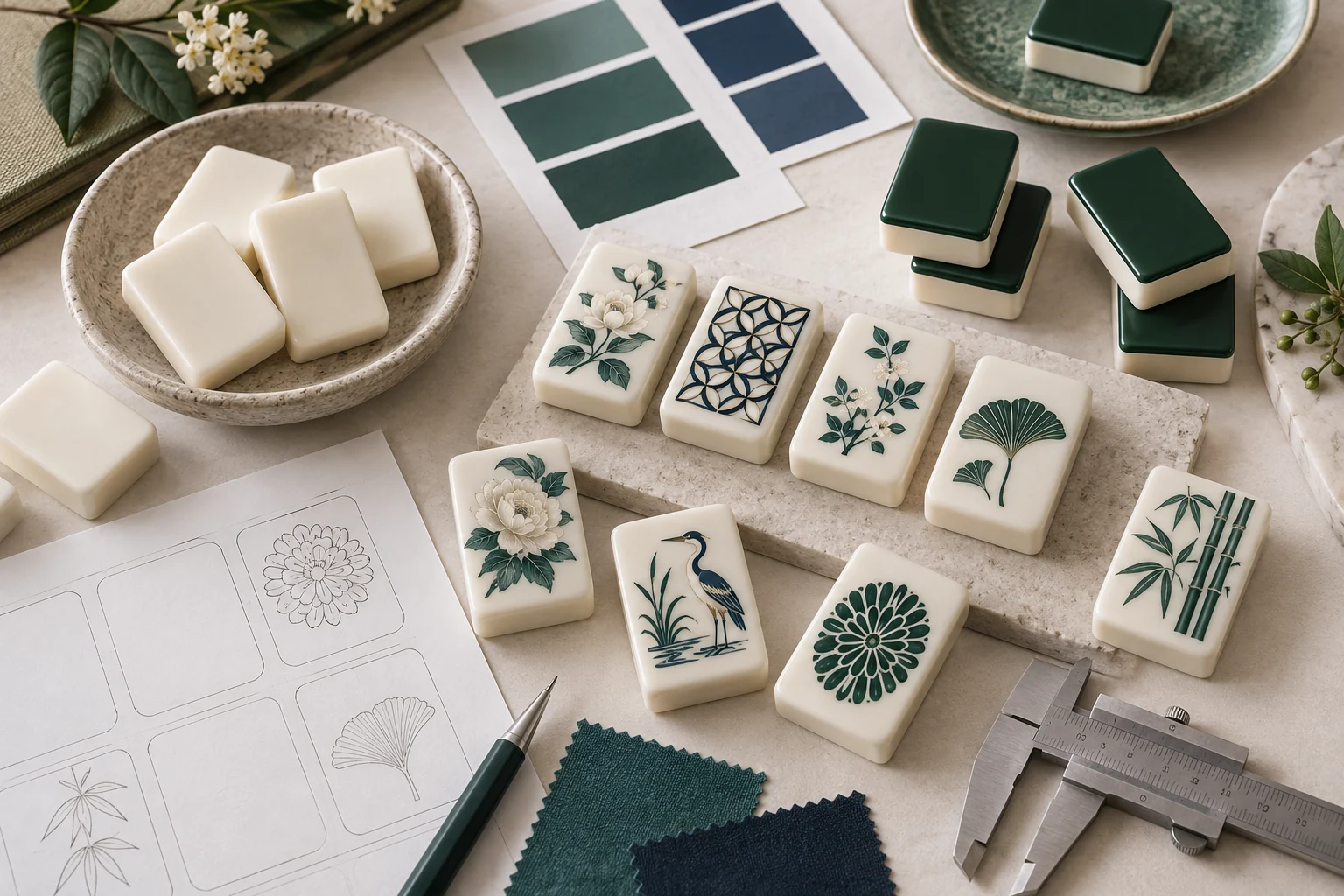
Supply artwork you own or are authorized to use, an itemized tile inventory and the intended dimensions. Identify the latest file version and distinguish face artwork from back artwork. A mood board helps explain direction; it does not replace the final production files.
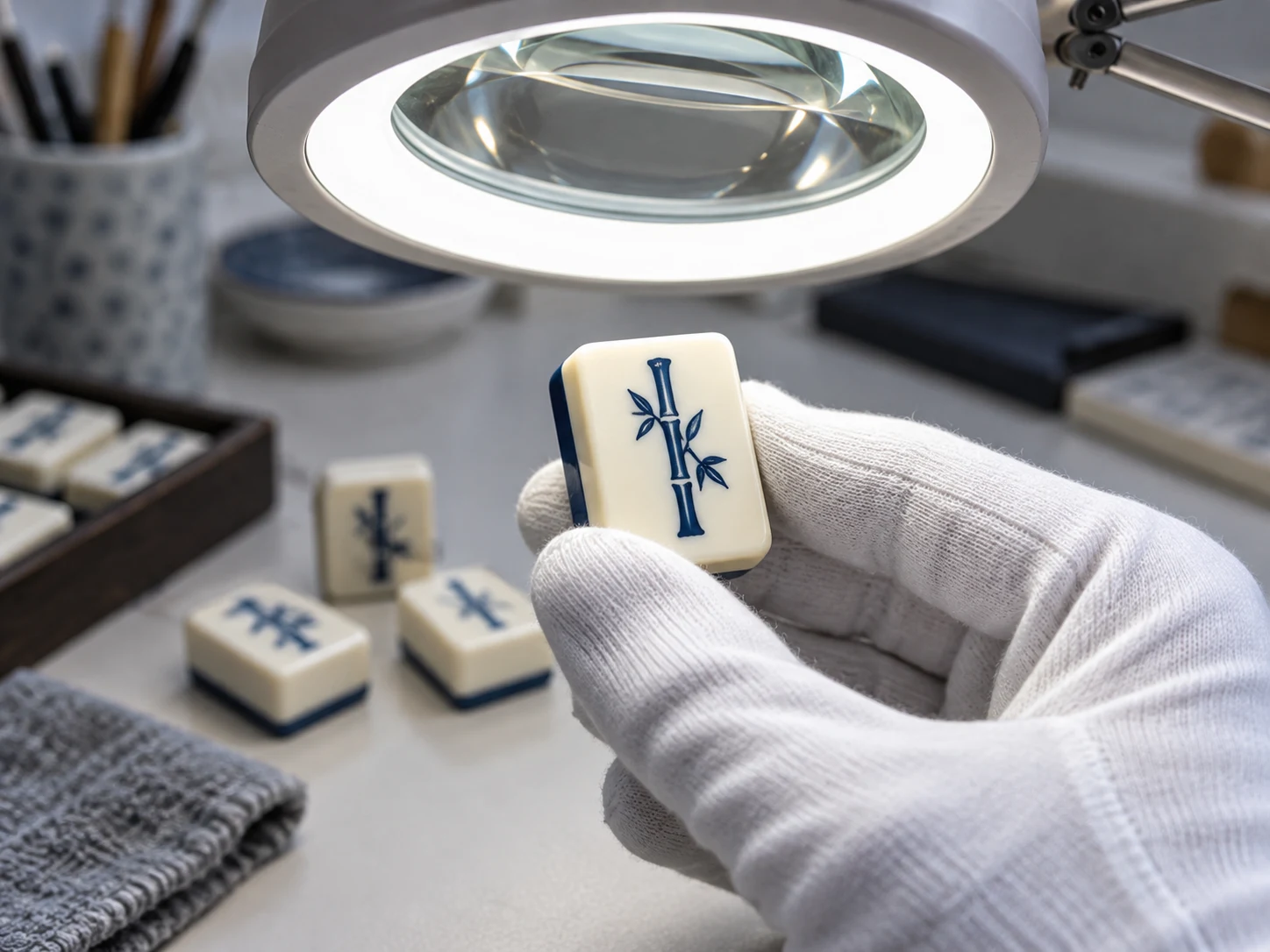
An ivory tile, a woven bag and a printed mat can render the same reference differently. Select a reference palette, then review each actual component under consistent light. Record the accepted sample and any permitted variation instead of approving the entire collection from one screen image.
Confirm scope and quantities, review artwork, approve the sample, then agree on production and inspection requirements. A late dimension or material change may affect accessory fit, price and timing. Keep one written change record so all parties work from the same approved version.
Get a focused OEM / ODM conversation about your American mahjong range. Share your product list, quantity per design, artwork status and destination. We can then discuss the sample scope, accessory fit and production schedule around your launch.