You already have artwork, a reference specification or an established collection to develop.
DEFINE THE DELIVERABLES
Product arrangement; confirm the selected configuration against an approved physical sample.
Artwork and manufacturability review
Component list and construction specification
Material-specific color and finish samples
A complete sample for written approval
Production and inspection requirements agreed before ordering
Proposed planning elements. Your quotation confirms actual scope, cost and schedule.
How we move forward.
Product arrangement; confirm the selected configuration against an approved physical sample.01
Share your specification
Include artwork, dimensions, components, target quantity and destination.
Product arrangement; confirm the selected configuration against an approved physical sample.02
Resolve the details
Review materials, print boundaries, tolerances and packaging together.
Product arrangement; confirm the selected configuration against an approved physical sample.03
Approve the physical sample
Confirm appearance, inventory and fit before authorizing production.
PROCUREMENT SCOPE
MOQ, sample and production planning.
All product categories start at 100 pieces per color, per size. Sampling and production timing are confirmed for the actual project; agree approval steps and transport separately. Agree materials, included components, logo placement, protective packaging and inspection evidence for the actual order.
Product arrangement; confirm the selected configuration against an approved physical sample.
If you have production-ready artwork and specifications, OEM is a useful starting point. If you have a mood board or customer concept and need design development, discuss ODM. Private label focuses on your brand across an agreed product and packaging format.
You do not have to choose the terminology yourself. Tell us what is ready, what you want to change and what help you need. The quotation should define the actual deliverables and approval stages rather than relying on a service label.
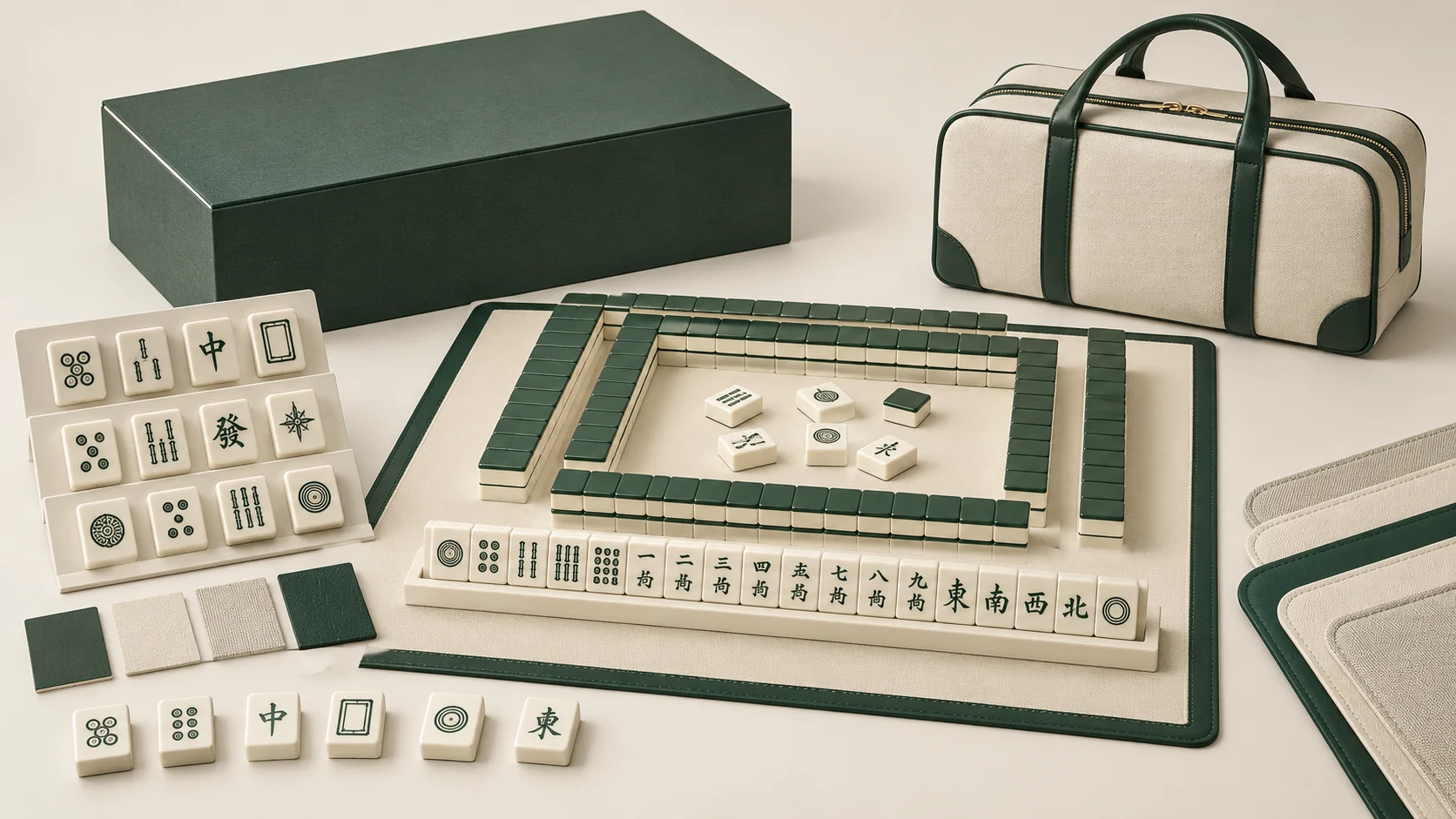
Yes, you can begin with a single category. When ordering accessories separately, confirm the purchasing unit, quantities per design/color and the measurements of the products they must fit. A set of racks, a carrying bag and a complete playing kit are different purchasing units.
For accessories intended for another supplier's tiles, provide real dimensions and a sample if available. Coordinated appearance should not come at the expense of usable fit.
Yes. All five categories support custom logos and custom packaging bags. Tiles also support original face artwork, back artwork and dimensions. Tell us where the logo should appear and whether you need a discreet mark or a more prominent design.
Ask about the suitable application method and related costs in your inquiry; these depend on the material, surface and design. Include the logo file, intended size, placement and color reference, then approve the actual product and packaging sample.
A physical sample is the point at which you can review the design as a complete product. Ask for the proposed sample scope, charges, delivery and approval steps before proceeding. For a coordinated kit, include the actual tiles, racks, mat and storage in the review rather than approving unrelated components separately.
Record the artwork revision, dimensions, material colors, inventory and packaging. If changes are needed, list them together and confirm any effect on cost or timing. Production requirements should refer to the approved sample and written specification.
Sampling and production timing are confirmed for the actual project; agree approval steps and transport separately. Shipping, customs and local delivery are additional. Artwork preparation, revisions and approval time also need space in your plan.
Send your desired arrival date, destination, quantity and artwork status. We can discuss the separate stages and the start milestone for each. Do not treat production time alone as a guaranteed door-to-door delivery date; confirm a project-specific schedule before committing to an event.
Share three essentials: your work email, the product category and a short project brief. We will use them to prepare the next questions for your quotation.
 Products