THE SHORT ANSWER
Make tiles the identity of the collection, coordinate mats and racks by color, and choose bags and boxes by use. Launch with a clear base and custom offer, then expand variants after buyer feedback.
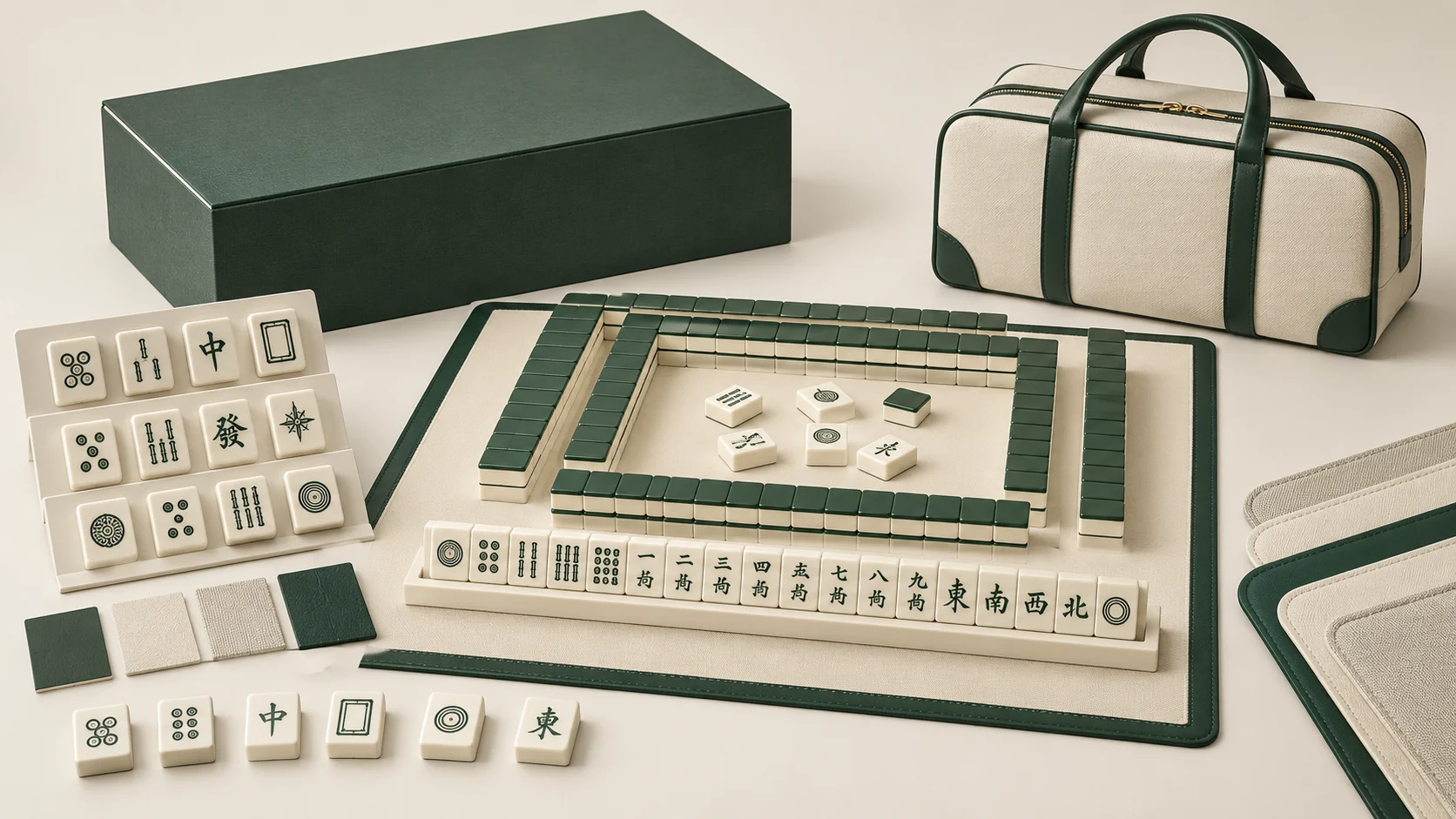
AI-assisted illustrative scene; not an inventory diagram or a customer endorsement. Finished specifications require sample approval.
- 01Define customer
- 02Choose core set
- 03Add matching categories
- 04Review as one range
Give every category a role
Tiles carry the most visible original artwork. Mats create the playing surface. Racks organize the tiles during use. Bags support transport, while boxes support storage and presentation. These are distinct buying decisions even when sold as a complete kit. A range becomes easier to understand when each category page explains its role, what can change and what needs to be approved. Avoid making customers infer the contents of a set from a styled photograph.
Choose one coordinated direction first
A focused first collection can use one tile-artwork direction and a small coordinated accessory palette. In our offer, tile fronts, backs and dimensions can be customized; mats, racks, bags and boxes support color customization. That distinction should appear clearly in the buying brief. The same named color can look different on hard and soft materials, so the collection needs physical material approvals rather than a promise of identical screen-to-product color.
Separate base products from custom development
Base-range orders start at 100 pieces. Custom orders require 100 pieces, depending on the project. Show the buyer which route applies before requesting detailed artwork. A base range can be an entry point for buyers who want an agreed existing configuration, while a custom brief allows original tile artwork and dimensions. Confirm allocation by product, color and design in the quotation so a wide assortment does not create an unexpected ordering requirement.
Choose storage by the customer’s use
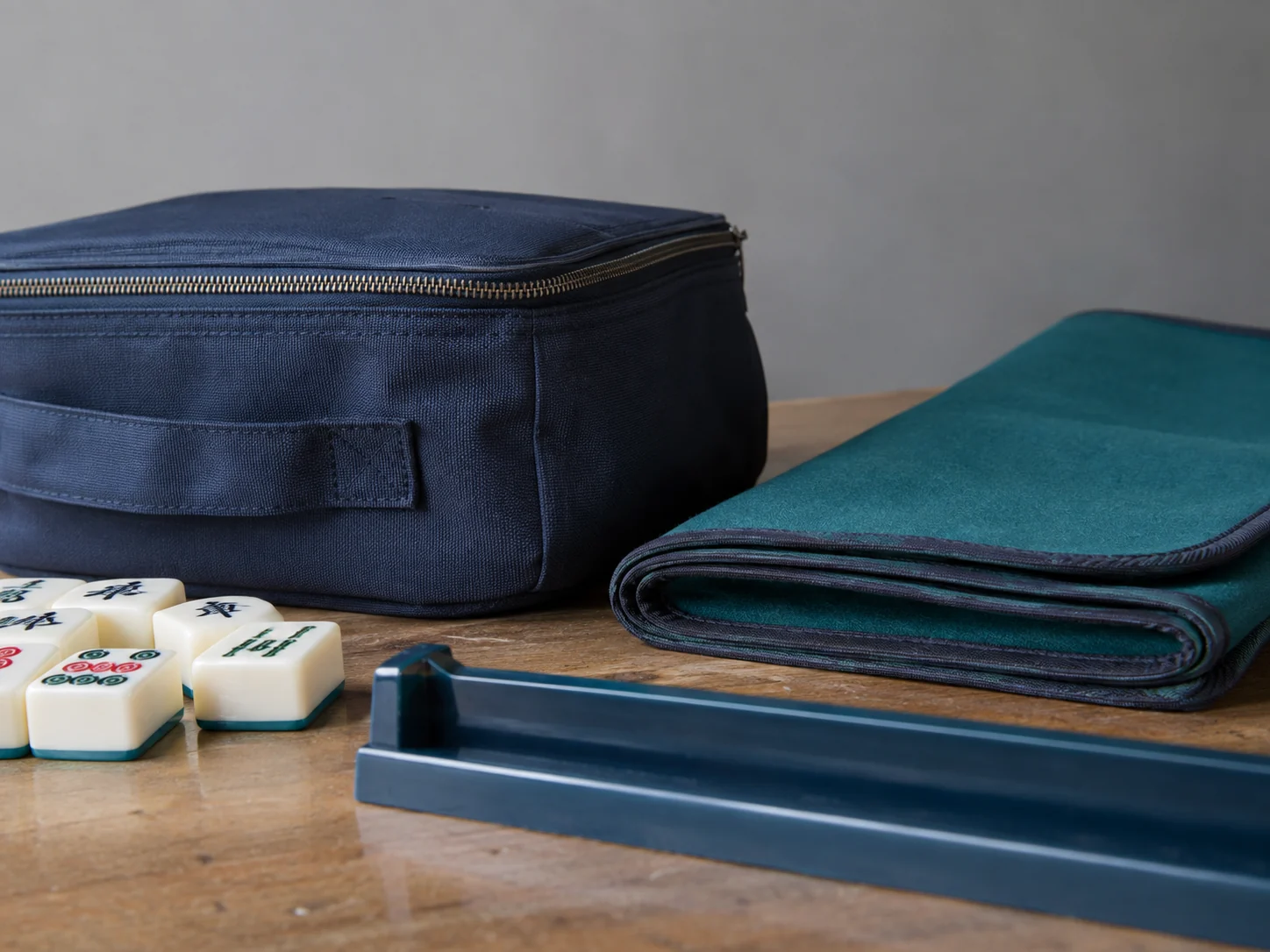
A tote, tile pouch and rack roll are complementary bag formats. A rigid storage box serves another role and should be evaluated with the full inventory inside. Do not add every format solely to increase the number of products. Ask which items the target buyer expects to carry, display or keep together. The recommendation to begin with a focused assortment is a development judgment; it is not a claim about market-wide sales rankings.
Use feedback to decide what comes next
Collect reactions to readability, rack compatibility, color coordination and loaded storage before multiplying designs. Public player discussions can suggest questions, but they do not measure demand for your own collection. Track actual buyer inquiries, requested quantities and sample feedback for the range you propose. Use those observations to decide whether the next addition should be a tile design, an accessory color or a different storage format. A clear first range makes that feedback easier to interpret.
Give every category a reason to exist
Tiles provide the game identity, while the other components solve table, handling and presentation needs. A coordinated range should explain those jobs without requiring every customer to buy everything. Let a buyer request mats, bags or boxes independently when that is the actual need.
Use the same palette direction, but keep separate specifications for different materials. A fabric bag and acrylic rack may coordinate without an exact visual match. Approve the intended relationship rather than treating one color code as a complete cross-material instruction.
Control the assortment before expanding it
Create a simple matrix of category, color, dimensions and packaging. Identify the combinations planned for the first order and those that remain concepts. This prevents preview images from becoming accidental promises of stock. Our current MOQ and mixed-color terms should be stated with the actual commercial unit.
After the first sample review, remove unresolved combinations from the immediate quote or mark them separately. A clear smaller scope is easier to compare than a large range with uncertain contents. Expansion should follow documented buyer needs, not the number of attractive variants that can be rendered.
KEEP THIS CHECKLIST
- One role for each category
- Base and custom routes clearly separated
- Tile artwork plus accessory colors
- Storage chosen by use
- Expansion based on actual buyer feedback
Sources & context
- Factory ordering scope: MOQ, customization, samples and shippingFactory terms confirmed by the owner on 10 September 2026 · Accessed 2026-09-11
- Reddit: Do expensive/fancy mahjong sets actually play better?Player discussion · Accessed 2026-09-11
- Reddit: Tiles are big — cannot find rack sizePlayer discussion · Accessed 2026-09-11
Forum excerpts are qualitative feedback. Product specifications describe linked products only. Recommendations are editorial judgments, not lab results or statistical popularity rankings. Editorial policy.