THE SHORT ANSWER
Approve custom mahjong colors on the actual component materials. Use one reference palette, review tiles, mats and bags under consistent lighting, and keep a labeled physical sample for each accepted finish. A digital color reference is a starting point, not proof of the finished match.
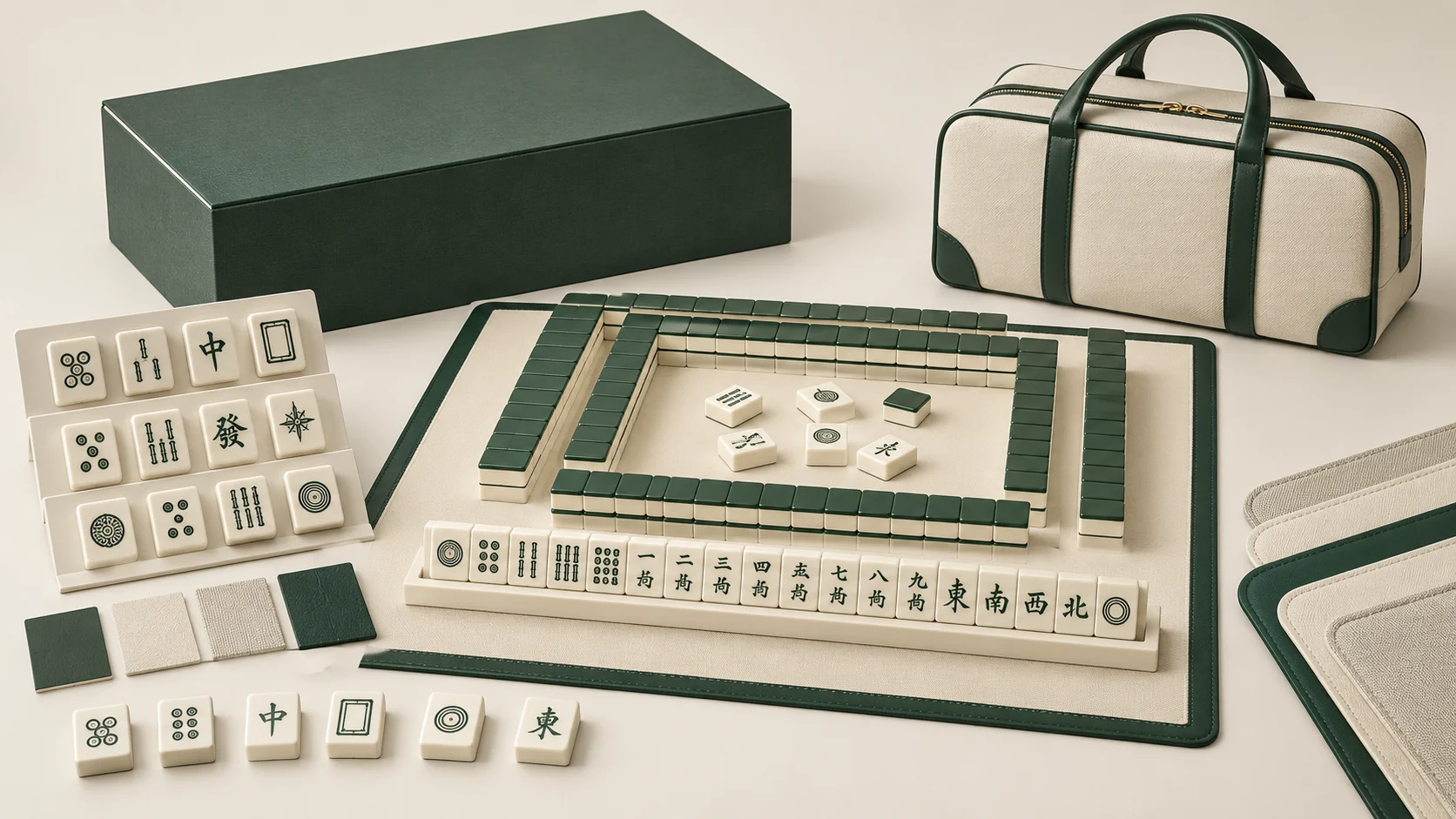
AI-assisted illustrative scene; not an inventory diagram or a customer endorsement. Finished specifications require sample approval.
- 01Select references
- 02Compare materials
- 03Review together
- 04Keep approved samples
Give the palette a hierarchy
Choose the main color, supporting colors and quieter background areas before multiplying variants. A strong tile back can be balanced by a calm mat center or a restrained bag color. This is an editorial design recommendation, not a claim that one palette sells better. The goal is to give your customer a recognizable collection without making the game harder to read.
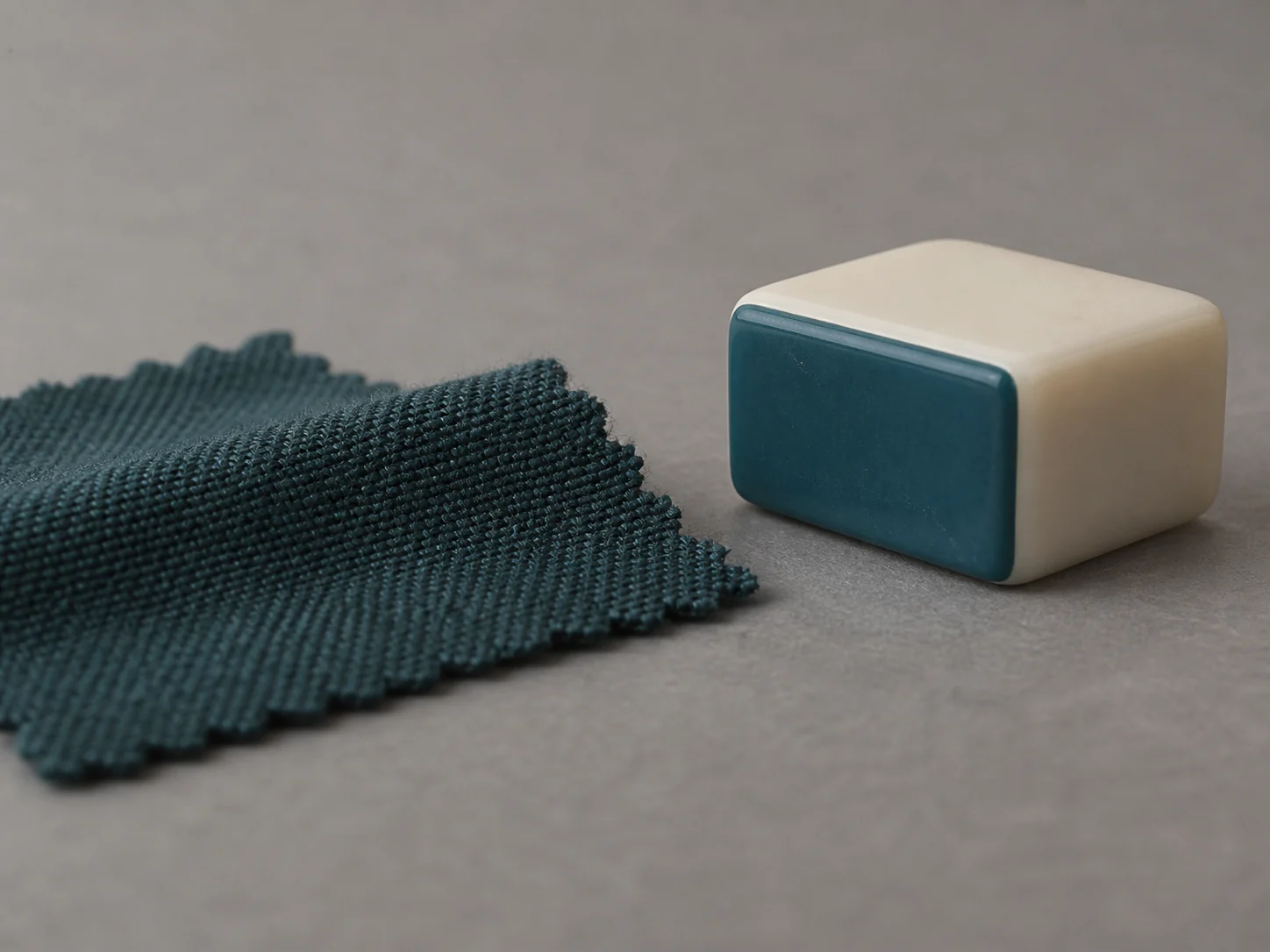
Compare surfaces, not just color codes
A smooth tile, transparent rack and textured fabric reflect light differently. Provide your preferred color reference and ask which construction and finish are proposed for each component. Review the actual samples together rather than treating a single approved tile as approval of the bag and mat. Record the reference and finish so another person can understand what was selected.
Review in consistent light
Place the proposed components next to the chosen reference in the same setting. Look at the full collection and at repeated pieces within the set. Note differences that matter to the design and discuss them before approval. Smartphone photographs and uncalibrated screens can help communicate a concern but should not be your only basis for a color decision.
Keep playability in the approval
Check tile identities, not only the backs. Similar decorative colors should not make two suits or honor tiles difficult to distinguish. Evaluate artwork at finished size and under ordinary room light. Review the center of the playing mat with tiles on it, because an attractive pattern in isolation may compete with the game. Ask your intended users for feedback on the physical sample.
Record the accepted collection
Label each accepted component with its artwork version, material and finish description. Keep the physical sample reference and list any agreed changes. If a later revision affects a visible component, review its relationship to the rest of the range before production. Agree any acceptance limits with the manufacturer instead of inventing a universal tolerance from a photograph or a color name.
Write down the intended relationship
Specify whether two components should be close in tone, deliberately contrasting or simply part of the same palette. This gives a reviewer a usable design intention. A vague request that everything “match” can lead to disagreement when smooth acrylic and textured fabric reflect light differently.
Review the chosen samples together and keep each material reference. If a color name is reused, make clear which actual finish it identifies. A navy preview on a screen is a selection aid, not a replacement for a physical acceptance reference.
Handle a later color concern systematically
Identify the product, order and component before comparing photographs. Note lighting and the reference used, and ask what evidence and assessment process apply. Our color-difference reporting deadline and replacement arrangements are confirmed by inquiry. Do not publish an automatic outcome for every concern.
Where a future order needs continuity, discuss the matching requirement before production. Keep the accepted sample available and record any approved variation. This is more useful than promising identical appearance under all lighting or across every future material batch.
KEEP THIS CHECKLIST
- Choose a reference palette and finish for each material
- Review actual components together
- Test artwork recognition at finished size
- Keep labeled samples and written approval
Sources & context
- Factory ordering scope: MOQ, customization, samples and shippingFactory terms confirmed by the owner on 10 September 2026 · Accessed 2026-09-11
Forum excerpts are qualitative feedback. Product specifications describe linked products only. Recommendations are editorial judgments, not lab results or statistical popularity rankings. Editorial policy.