THE SHORT ANSWER
Use a distinct Global Trade Item Number (GTIN) for a fixed physical bundle of separately identified trade items sold as one unit under GS1 rules. Keep individual product codes on the component records. For a cart offer that combines separately picked items, confirm the channel’s virtual-bundle rules before printing any new code. If you swap a trade item in a predefined physical assortment, review the bundle GTIN before releasing the next print run.

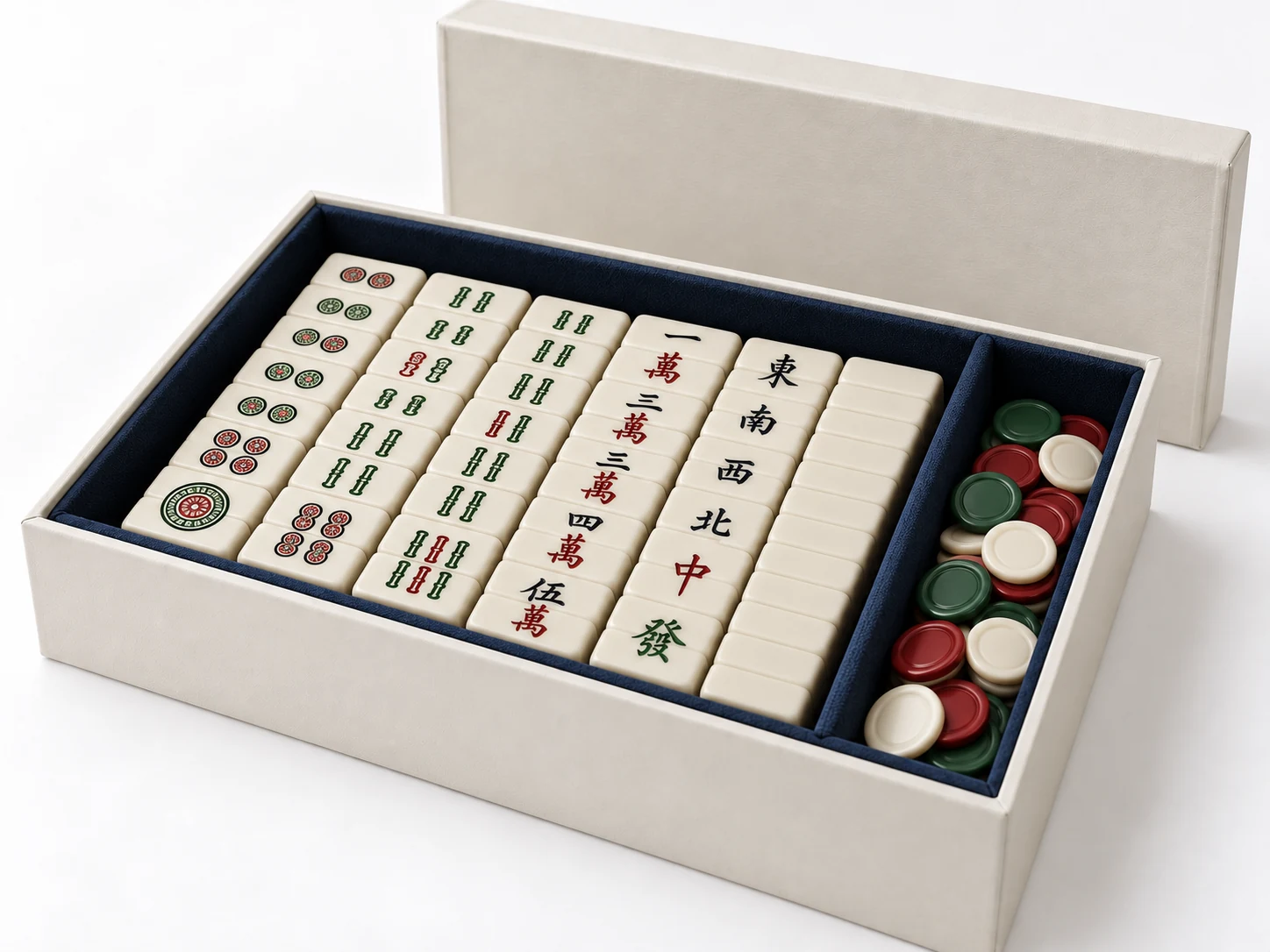
A game box, a rolled mat and a separate accessory box beside mahjong tiles.
1. Map the unit the customer buys
Start with the unit that has one fixed description at checkout and one defined configuration at dispatch. A tile set with its ordinary internal contents is a single trade item; the individual jokers and tiles within it are not automatically trade items. If an independently sold tile set and an independently sold mat are physically combined and offered under one fixed assortment, map that pack as a separate unit. A promotion that adds a separate item at checkout does not by itself tell production what to pack.
Sources: GS1 — GTIN Management Standard, section 2.9GS1 — Identifying physical and virtual bundles
2. Record the component and bundle identifiers
A stock-keeping unit (SKU) is your internal inventory label. A GTIN identifies a trade item between trading partners, and a barcode is the scannable symbol used to encode the identifier. Record the SKU and GTIN separately. The party creating a physical bundle should own its assignment decision; for a manufacturer-defined bundle already carrying an assigned GTIN, use the existing identifier as GS1 advises. Confirm who supplies the number and who checks the printed symbol against the buyer’s item master before the printer makes a plate.
Sources: GS1 — Identifying physical and virtual bundles
| Selling arrangement | Record in the item master | Before printing |
|---|---|---|
| Standalone tile set | Tile-set SKU, agreed GTIN and its exact contents | Confirm the code is for this sellable set |
| Fixed tile-set and mat pack | Bundle SKU and GTIN; child tile-set and mat records | Approve the outer pack code separately from child labels |
| Cart offer with a choice of mat | Separate item records and the offer or listing reference | Confirm how the channel represents virtual bundles |
| Fixed pack with a replacement trade item | Revised bundle record and applicable new GTIN | Separate revised and old labels when both are in stock |
| Wholesale case of retail packs | Case quantity and packaging hierarchy | Confirm receiving and outer-case code requirements with the retailer |
3. Read the promotion terms before creating a pack
Moira Mahjong’s November 2026 event terms offered buyers a choice of a participating mat or a discount with a qualifying tile set. The terms also said design mats would ship separately from the tile set. That is one documented offer structure. It does not disclose how the seller applies GS1 identifiers and does not prove a wider market shift. The useful question for your launch is whether the customer selects a separately picked accessory or buys one physically fixed combination. Write the fulfilment rule into your brief; a product photo showing mats and racks together cannot answer it.
4. Control substitutions by their trade-item effect
GS1 calls for a new GTIN when a trade item in a predefined physical assortment is added, changed or replaced. For example, switching to a separately identified mat design in a fixed tile-set and mat pack changes which trade item the buyer receives. Keep both versions distinct if both are still shipping. A correction to the internal warehouse description is a different sort of change. For any border case, compare the actual revision against the full GS1 standard and the retailer’s requirements before deciding whether to retain the number.
5. Release one package code map
Give the production and warehouse teams the same record: sellable pack, component identifiers, exact quantity of each child item, outer case quantity, code owner, artwork revision and the person who clears the first printed unit. Verify the outer code on the assembled pack and check what the scanner reads through the final tape, wrap or finish. Ask the retailer how it wants internal item codes treated when scanners could see more than one symbol. Do not print an internal item’s barcode on the bundle face simply because it is the only file available.
Use the order brief to keep sellable units distinct
Our published range treats tiles, mats, racks, bags and boxes as separate product categories. In-stock categories can be ordered separately or mixed by category, with allocation confirmed. Our complete-set route brings all five categories together; the individual counts and packing layout still need an agreed bill of materials. Send the quantities by SKU and indicate which packs are fixed retail assortments. We can review the configuration in your brief; the party responsible for assigning the trade identifier remains part of your channel plan.
Buyer questions
Use these checks before your first barcode proof.
Does every tile or joker need its own GTIN?
No. The playing contents of one retail set are not separately identified trade items merely because they appear on its inventory list. A replacement item sold in its own right is a separate identification decision.
Can a physical bundle use the tile set’s GTIN?
A fixed bundle of independently identified items has its own identity under GS1. Keep the component code on its component record and use the assigned bundle code for the fixed pack.
Is a cart discount with a chosen mat a physical assortment?
Check how the order is picked and sold. A separately picked checkout offer can be a virtual bundle. Confirm the channel requirements before changing any printed codes.
When does swapping the mat require a different bundle GTIN?
If a different trade item replaces the original mat in a predefined physical assortment, GS1 calls for a new bundle GTIN. Review both the print proof and the corresponding item master.
Should the factory invent a barcode if the buyer has not sent one?
No. Identify who owns assignment, get the approved number and symbol file, and put the print release on hold until they match the actual sellable unit.
KEEP THIS CHECKLIST
- List what a customer buys and how the warehouse picks it
- Distinguish SKU, GTIN and barcode artwork
- Confirm the code owner and channel rules
- Map substitutions to the correct bundle revision
- Check the printed symbol on the assembled pack
Sources & context
- GS1 — GTIN Management Standard, section 2.9GS1 standard for identifying predefined assortments · Accessed 2026-11-16
- GS1 — Identifying physical and virtual bundlesGS1 guidance, updated August 30, 2024 · Accessed 2026-11-16
- Moira Mahjong — November 2026 event termsOne retailer’s November 2026 offer terms; no sales or GTIN data · Accessed 2026-11-16
This guide covers GS1 trade-item identification and packaging handover. Retailers and marketplaces may impose their own listing, scanning and fulfilment requirements. It does not establish any retailer’s actual identifiers. Editorial policy.