THE SHORT ANSWER
Check inventory, face readability, back uniformity, dimensions, rack fit, mat behavior, loaded storage and packing. Record the approved sample and acceptance criteria before custom production begins.
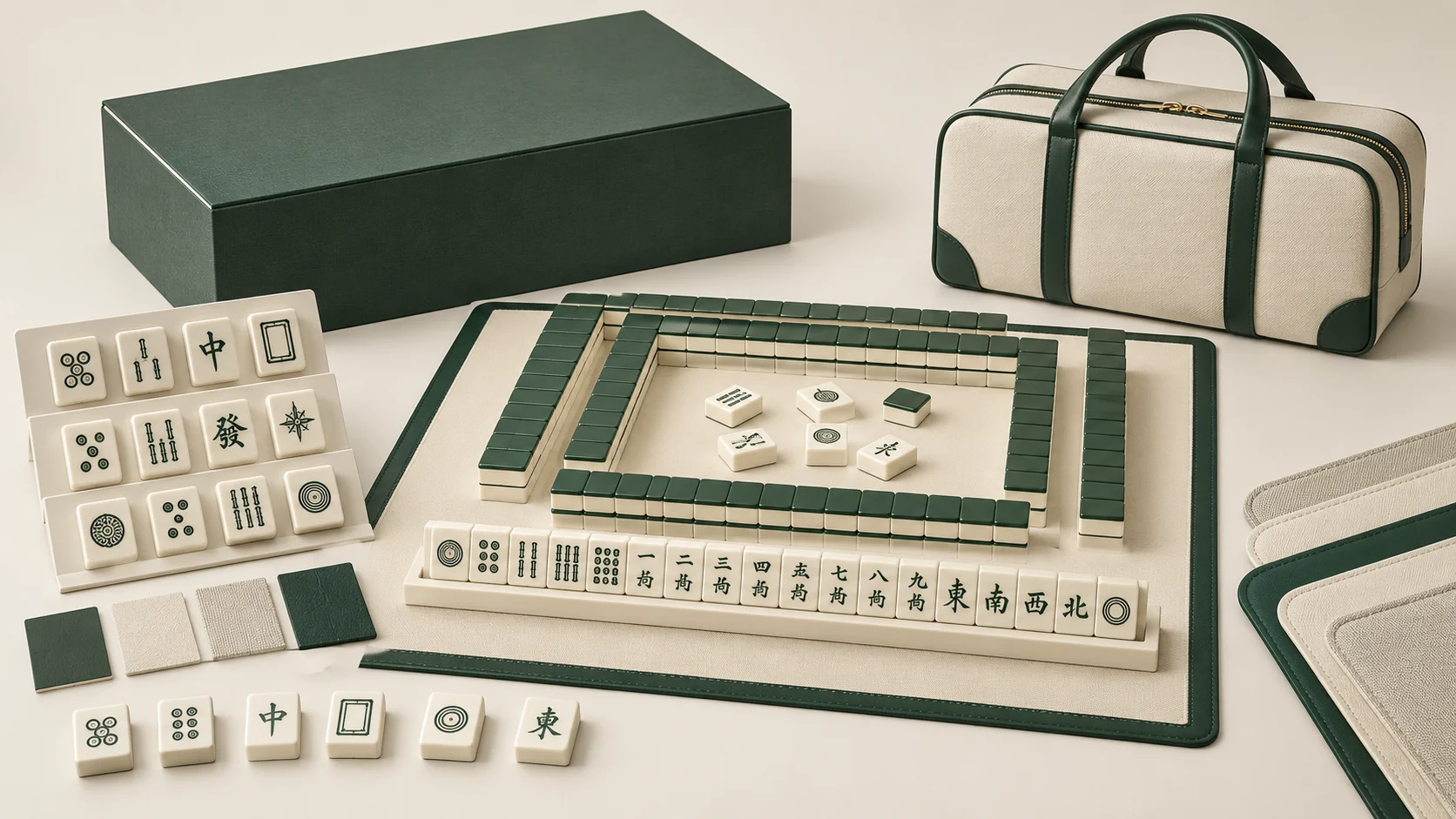
AI-assisted illustrative scene; not an inventory diagram or a customer endorsement. Finished specifications require sample approval.
- 01Define acceptance
- 02Review each component
- 03Test assembly
- 04Record approval
Why a complete sample matters
An attractive tile sample does not prove the rack will fit, and an empty bag does not show how the kit travels. The purpose of a coordinated sample is to test those relationships. The eight checks below are an editorial approval order, not a claim that every issue has equal severity. Buyers should adapt the inspection plan to the actual product, intended users and contractual requirements. Keep photographs and measurements with the approved specification.
1–3. Count, recognize and compare
Count every tile against the approved inventory, including extra pieces. Then review front readability with the intended users and compare the tile backs across the complete set. The goal is to identify missing faces, confusing identities and unwanted visible differences before production. Record any discrepancy against the exact artwork or inventory version. A workshop photo can show assembly activity, but it cannot replace checking the buyer’s particular sample.
4–5. Measure the tiles and fit the racks
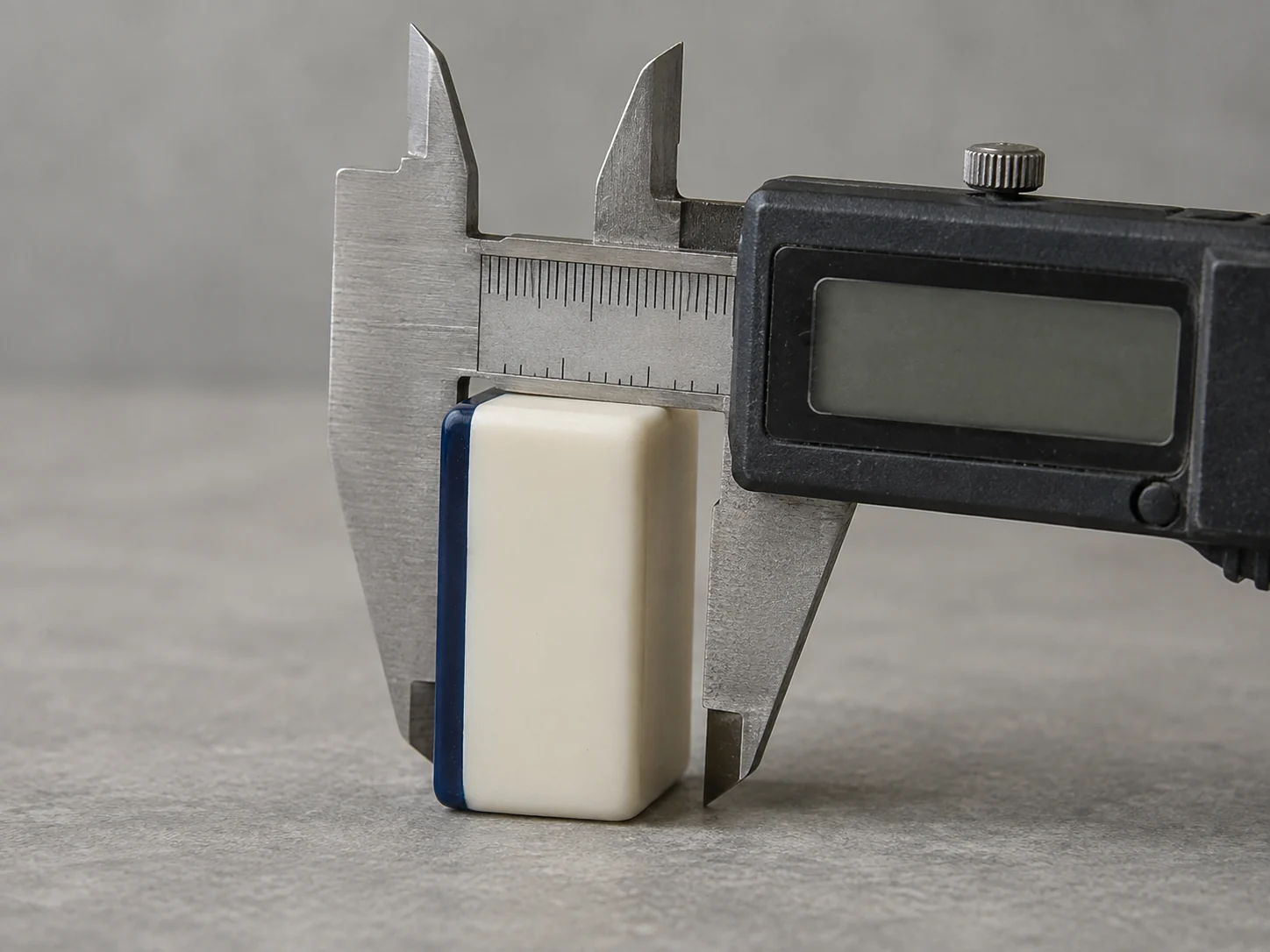
Measure width, height and thickness, then place the actual tiles on the intended racks. Review stability, pusher clearance and the usable length. The linked player discussion about large tiles illustrates why a general American-mahjong label does not guarantee accessory compatibility. Any calculation used to plan rack length should be checked against the physical rack profile and finished tile dimensions, including the agreed tolerances.
6–7. Play on the mat and load the storage
Lay the mat on the intended type of table and try moving the tiles and racks. Check whether the mat remains flat after the proposed packing method. Next, pack the entire inventory into the selected bag or box, including the agreed accessory bundle. Close the storage without forcing it and check contact between hard components. Document the selected arrangement so production packing can follow the approved version.
8. Approve the pack-out and records
Confirm the retail components and outer packing requirements together. State the inspection method, acceptance criteria and process for addressing a discrepancy in writing. Our sampling allowance is 25–30 days; custom production is 30–40 days, with scheduling confirmed in the quotation. A revised sample may change the plan. Clear version control and written approval help both parties distinguish an accepted feature from an unresolved request.
Make acceptance observable
Replace “premium quality” with the characteristics the buyer will actually review: identity count, dimensions, face alignment, surface appearance, rack fit and packed contents. Record the sample used for comparison and any accepted exceptions. Avoid declaring a tolerance that has never been discussed with the manufacturer.
A checklist should be usable by someone who did not attend the design meeting. Include enough context to identify the right version and the component being checked. If a result is subjective, such as the desired visual relationship between two materials, retain the relevant physical reference.
Resolve sample changes before production
A sample can be accepted in part while still needing a change to one component. Mark the unresolved item clearly and state what approval is required next. Do not let a general positive comment override an open dimensional or inventory issue.
Ask how the accepted sample connects to the inspection plan for the order. A sample review is not a certificate for every unit. Keep production evidence, inspection records and customer-support arrangements distinct, and confirm the applicable process through the supplier conversation.
KEEP THIS CHECKLIST
- Inventory
- Front readability
- Back uniformity
- Dimensions
- Rack fit
- Mat behavior
- Loaded storage
- Packing and approval record
Sources & context
- Factory ordering scope: MOQ, customization, samples and shippingFactory terms confirmed by the owner on 10 September 2026 · Accessed 2026-09-11
- Factory production and assembly photographsFactory-supplied process photography · Accessed 2026-09-11
- Reddit: Tiles are big — cannot find rack sizePlayer discussion · Accessed 2026-09-11
Forum excerpts are qualitative feedback. Product specifications describe linked products only. Recommendations are editorial judgments, not lab results or statistical popularity rankings. Editorial policy.