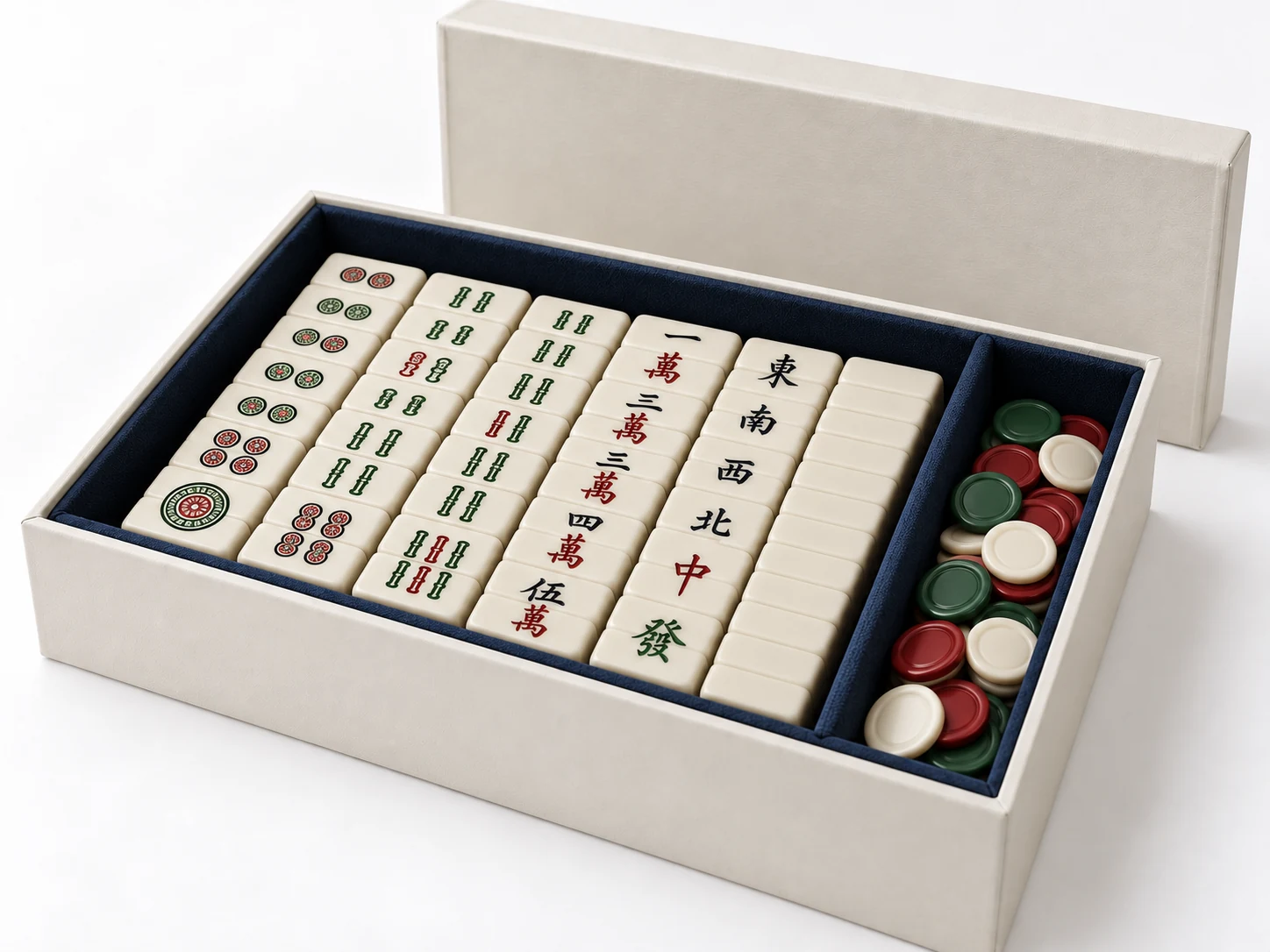
THE SHORT ANSWER
Recycled content describes the material used to make a specified item. Recyclable describes its potential recovery after use in the market where it is sold. Neither claim proves the other. For mahjong packaging, identify whether the wording refers to the box, insert, sleeve or wrapping, then request evidence for that component and claim.
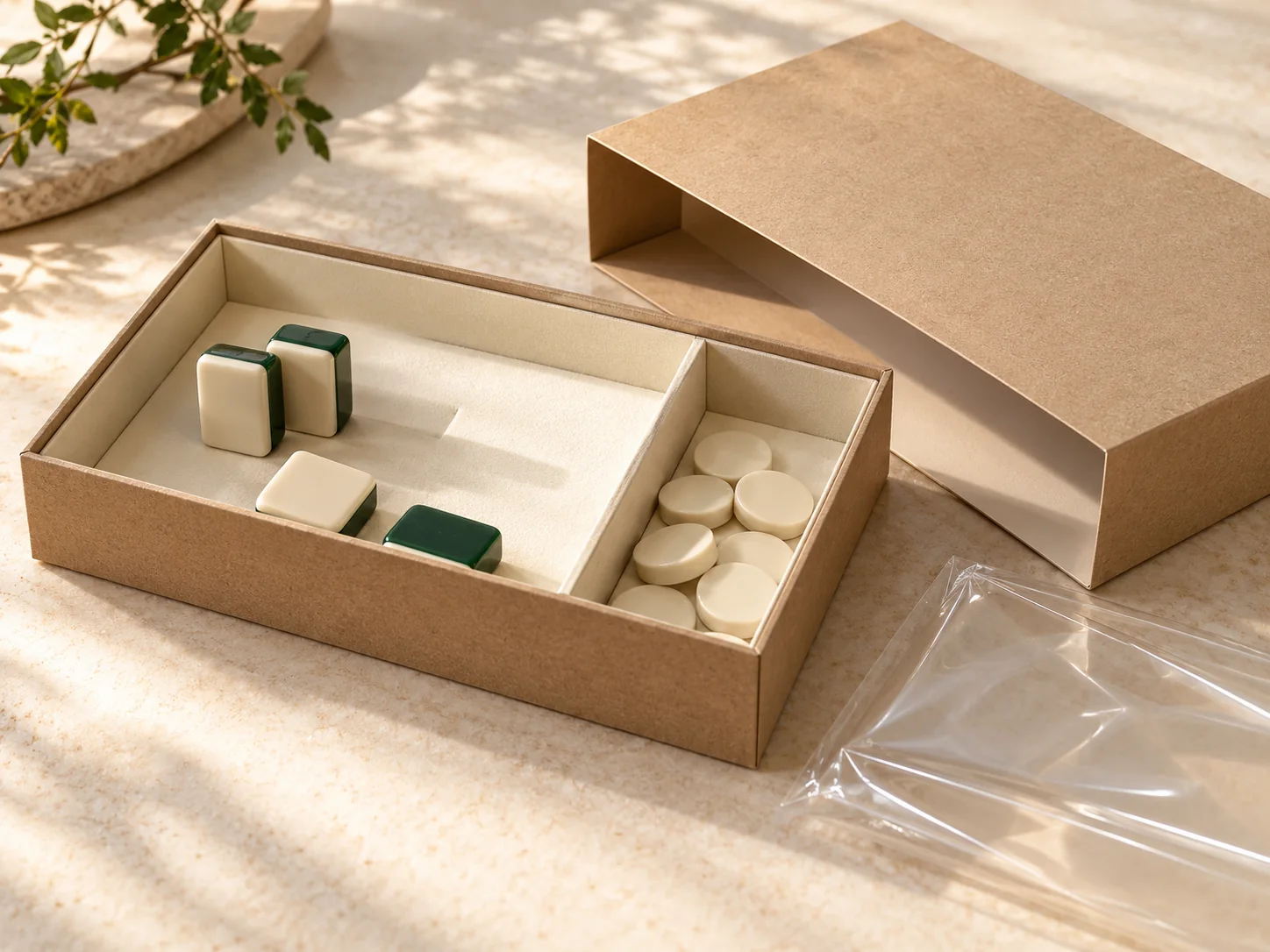
Box, sleeve and wrapping are separate packaging components. Their appearance does not establish recycled content or local recycling acceptance.
Why packaging evidence is a current buying question
On October 28, 2026, HMRC published its consultation outcome on certification for mechanically recycled plastic packaging. The government intends mandatory certification for Plastic Packaging Tax purposes from April 1, 2030, with detailed requirements still to be developed. This is a future policy arrangement, not a new certificate required for every mahjong shipment today.
For a brand planning UK packaging, the practical question is what evidence the supply chain can retain. The announcement does not establish that a particular storage box is taxable packaging, that it contains recycled plastic or that a supplier holds certification. Ask the responsible importer to assess the actual components.
Sources: HMRC — Mechanically recycled plastic packaging consultation outcome
What each claim actually describes
The FTC’s U.S. Green Guides distinguish recycled-material claims from recycling claims. They advise qualifying partial recycled content and considering access to suitable recycling facilities. Broad environmental claims also need substantiation. Those principles help organise a brief; their U.S. scope must not be substituted for another market’s rules.
Sources: FTC — Environmental claims: summary of the Green Guides
| Claim question | Evidence focus | What it does not establish |
|---|---|---|
| Does this component contain recycled material? | Material identity, amount, basis and supporting records | Whether the finished item is locally recyclable |
| Can this finished component be recycled? | Construction and appropriate collection or recovery access | That recycled material was used to make it |
| Does the statement cover the whole package? | Explicit scope across box, insert, sleeve and wrap | That one component’s evidence covers all others |
| Is a mark or certificate relevant? | Holder, covered material, period and permitted use | Every environmental benefit or every finished product |
Start with the packaging options actually offered
Our owner confirms a wool-bag option, plastic film, plastic boxes and leather cases, with other packaging routes available for discussion. Customers may also provide their own packaging requirements. These are packaging choices, not environmental certifications. Confirm the fibre composition of the selected bag and the exact outer material and construction of the selected case before writing a material label.
Give each selected item its own entry in the packaging brief. A bag, a film wrap and a hard box need different evidence checks; documentation for one does not establish the attributes of another. No recycled-content percentage or certification is confirmed here. Ask what records are available for the selected material before approving any environmental wording.
Keep the evidence at component level
Build a packaging map before writing a claim. Give the outer box, lining, divider, sleeve and wrap separate entries where present. Ask which materials and finishes make up each item, who supplies it and which record supports the proposed statement. A photograph is useful for identifying the component; it cannot establish composition.
Keep the purchase specification and the evidence linked by a revision or batch reference that your actual supplier can support. If a lining, coating, adhesive or wrapping changes, return the affected claim for review. This is a proposed control method, not a description of a completed audit at this project.
Ask questions that a supplier can answer
Start with the claim you intend to make and the destination. Ask for the evidence basis rather than asking whether the whole collection is “sustainable.” If the reply covers only the paper sleeve, do not transfer it to the box or plastic wrap. Leave unsupported wording out of the release.
For an opening collection, you can make progress without selecting a marketing percentage first. Request the existing material specification, the available evidence and the limits on public use. Then decide whether a specific statement is supportable. A higher recycled-content figure is not evidence of better product protection, and a protective package still needs its own fit review.
| Brief field | Request to make | Hold point |
|---|---|---|
| Market | Destination and intended sales channels | Do not reuse one market’s wording automatically |
| Component | Identify the exact box, insert, sleeve or wrap | Do not describe the whole set from one record |
| Composition | Material breakdown and evidence basis | Do not infer content from kraft colour |
| Claim scope | The exact attribute the evidence supports | Remove broader implications that are unsupported |
| Traceability | Applicable supplier, revision and batch reference | Recheck after a relevant material change |
| Approval owner | Who checks the public wording and records | Keep artwork approval separate from evidence review |
Separate UK tax preparation from customer-facing wording
A record used for a tax position and a statement printed on retail packaging answer different questions. The future HMRC arrangement is specific to mechanically recycled plastic and Plastic Packaging Tax. It is not proof of recycling access in a customer’s area or a universal environmental endorsement.
This guide is useful when a buyer is preparing a packaging specification or reviewing proposed wording. It does not calculate tax, determine packaging classification or promise certified materials. No project-specific recycled-content records have been established here. Confirm material availability, documentation, costs and any applicable obligations for the selected configuration before approving a claim.
Buyer questions
Use these questions to separate a useful material discussion from a broad environmental promise.
Does a kraft-coloured box prove recycled content?
No. Appearance does not establish material composition. Ask for evidence covering the specific component.
Does recycled content mean the package is recyclable?
No. Composition and recovery after use are different questions. Review both separately.
Can a sleeve’s evidence cover the entire mahjong set?
No. State which component the evidence covers and assess any wider claim independently.
Is the announced UK certification requirement already mandatory for every order?
No. The HMRC outcome states an intended April 1, 2030 start for the specified Plastic Packaging Tax arrangement; details remain under development.
Can you confirm recycled packaging for my collection now?
The material, evidence availability and public wording need confirmation for your chosen configuration. This guide does not claim a verified recycled-content option.
Bring the evidence request into the packaging brief
Identify the components and destination before discussing a claim. Keep protection and loaded fit as separate approval questions.
KEEP THIS CHECKLIST
- Name the destination and claim
- Map each packaging component
- Request composition and traceable records
- Check recycling wording separately
- Recheck evidence after material changes
Sources & context
- FTC — Environmental claims: summary of the Green GuidesU.S. environmental marketing guidance; no product-specific certification · Accessed 2026-11-02
- HMRC — Mechanically recycled plastic packaging consultation outcomeOutcome published October 28, 2026; intended certification from April 1, 2030; detailed requirements still to be developed · Accessed 2026-11-02
Educational guidance for packaging briefs and environmental wording. No recycled-content percentage, recycling acceptance or environmental certification is claimed for this project’s products or packaging. Editorial policy.