THE SHORT ANSWER
Approve tile identities, counts, front artwork, back consistency, dimensions, physical color and the final file version before production. This is an editorial workflow checklist, ordered by what should be resolved first, not a ranking based on test data.
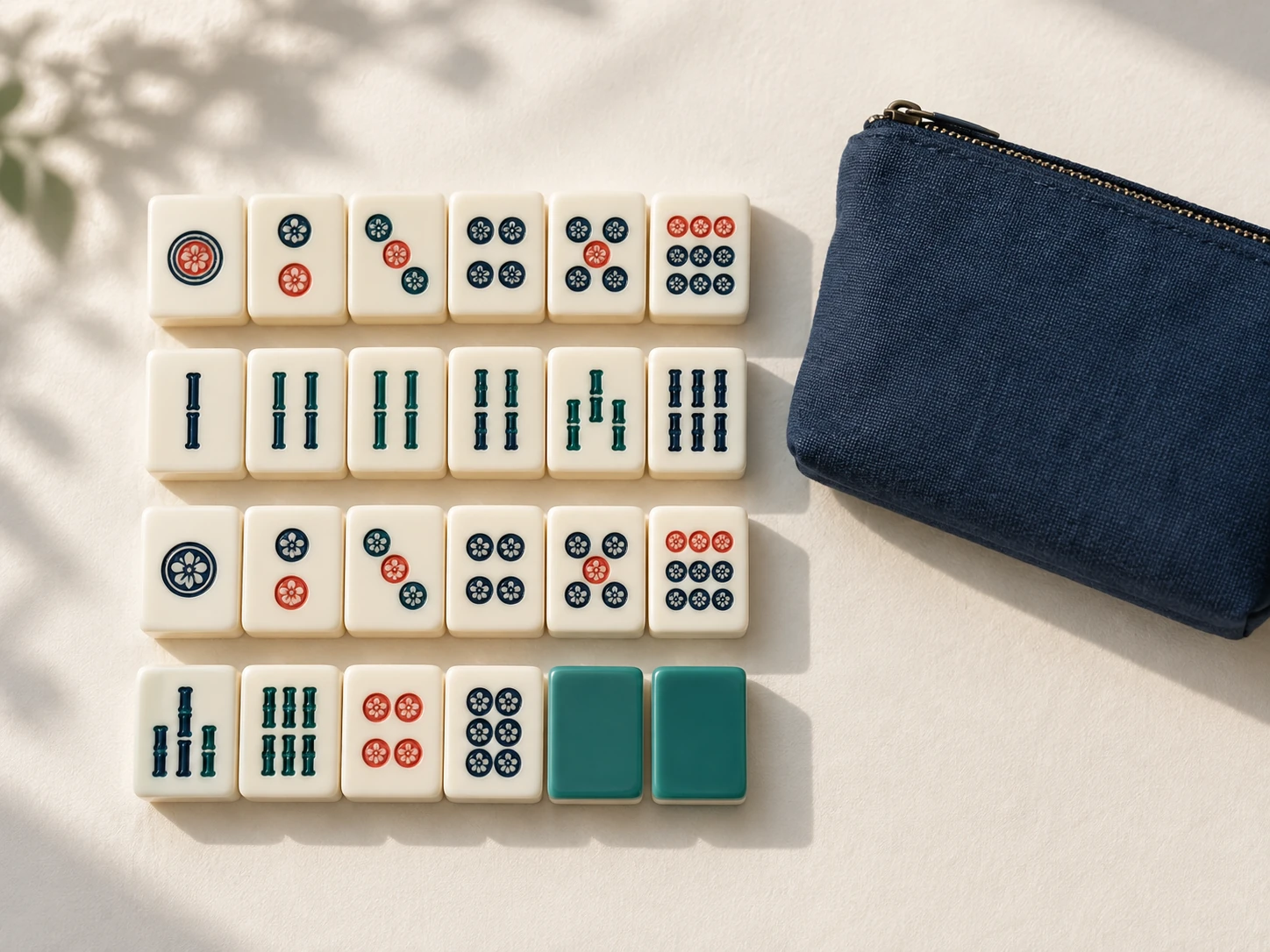
AI-assisted illustrative scene; not an inventory diagram or a customer endorsement. Finished specifications require sample approval.
- 01Map all faces
- 02Check scale
- 03Review recognition
- 04Release artwork
1–2. Identify every face and its quantity
Start with the playing format and a face-by-face inventory. A total count does not describe which extra jokers, blanks or flowers belong in the package. Give every artwork file a clear identity and connect it to a quantity in the inventory. This reduces ambiguity when a collection uses original illustrations. Decorative treatments should still allow the intended players to recognize the suits, winds, dragons, flowers and jokers.
3. Review the front at actual size
An enlarged digital proof is useful for checking details but can hide a readability problem. Print the design at the proposed tile size and assess it under ordinary indoor lighting. Compare visually similar faces next to each other. A small line or subtle shade that looks elegant on a large screen may not remain distinct on a finished tile. Ask intended users to try recognizing the identities before the design is locked.
4. Keep the backs consistent
Approve the back artwork separately from the front. Review its position, orientation and visual consistency across the complete sample. If different groups of tiles have visibly different backs, players may receive information that should not be available while the tile is concealed. The manufacturing brief should therefore address variation across the set, not only the appearance of one attractive back. Include any approved border and alignment requirements in the sample record.
5–6. Connect dimensions and color to the sample
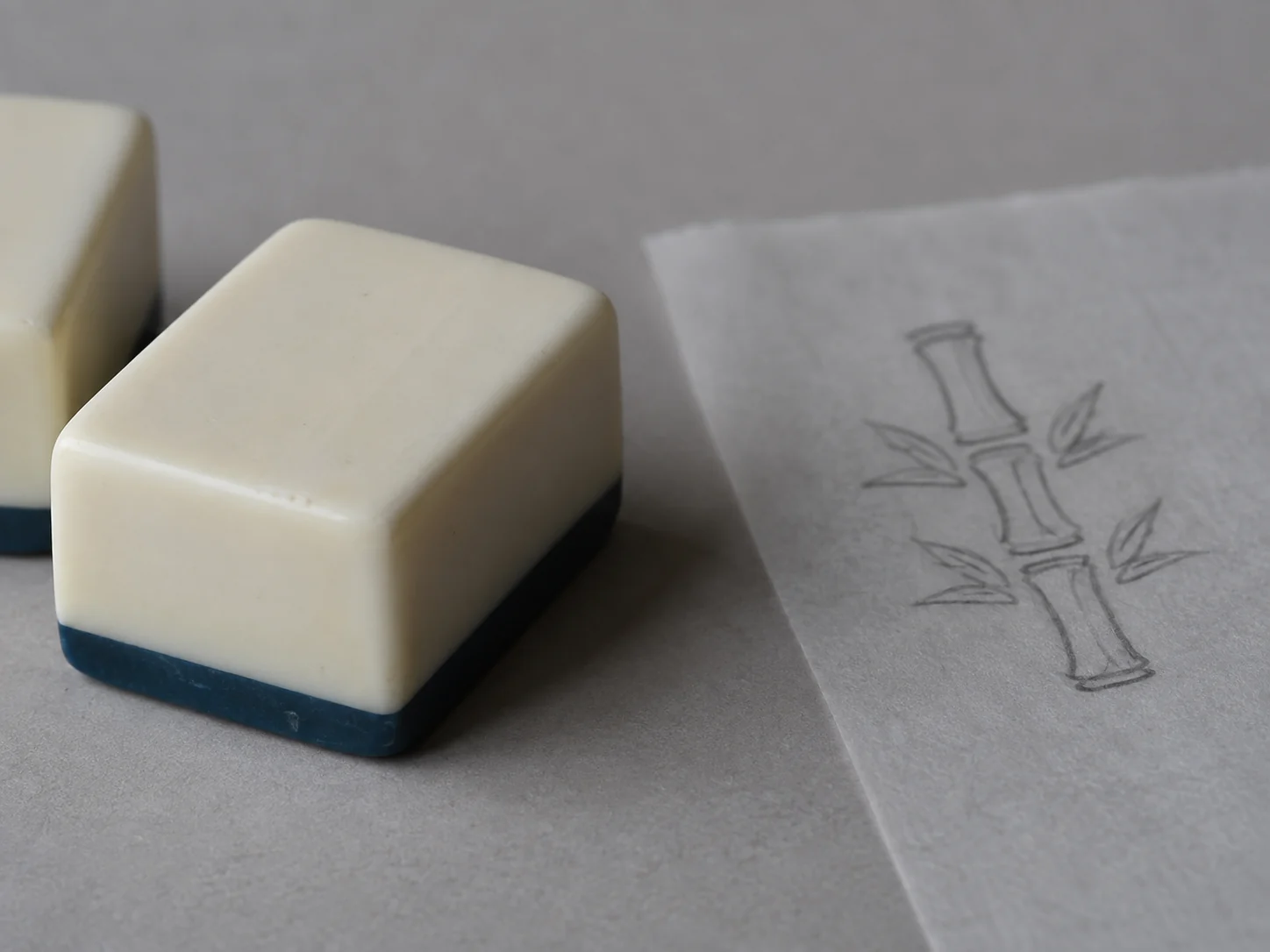
A dimension change affects more than the tile. Check rack clearance, the length needed for a wall and the packed storage arrangement. Approve physical color references on the actual chosen material rather than treating a screen color as a final standard. Our tile customization scope includes front artwork, back artwork and size. Mats, racks, bags and boxes are coordinated through color selection, with their own material samples.
7. Release one identifiable file version
Keep a dated artwork release, the face inventory and the signed-off sample together. Record the specific changes made after each review, and ensure the production instruction points to the final version. Confirm the right to use supplied artwork and agree ownership terms for newly developed designs. This checklist describes an approval process; it does not claim that a particular file format or printing method is universally suitable for every material.
Review recognition before embellishment
Mix several faces rather than presenting only a perfectly ordered suit. Ask someone from the intended audience to identify them at the actual playing distance. If recognition depends entirely on a tiny index, revisit the relationship between the main symbol and the number. This is a usability review, not a claim that one artistic style is universally correct.
The public design discussions linked in the research library include criticism of unfamiliar layouts. Use those comments as a test prompt, not a mandate to copy traditional or competing artwork. The final design should be original or authorized and understandable to its intended players.
Create a production handover that is hard to misread
Keep the approved face artwork, quantity list, back design and full dimensions in one versioned package. Mark files that are references rather than production-ready art. Record the chosen revision and the date of approval so an earlier option is not used accidentally.
If a sample reveals a needed change, list it explicitly and identify whether the next approval is digital, physical or both. Artwork cleanup, a dimension change and a different material finish are not interchangeable revisions. Ask about their scope before assuming they fit the same sample arrangement.
KEEP THIS CHECKLIST
- Face identities and quantities
- Actual-size readability
- Uniform back design
- Dimensions and accessory fit
- Physical color references
- Artwork rights
- One approved release version
Sources & context
- Factory ordering scope: MOQ, customization, samples and shippingFactory terms confirmed by the owner on 10 September 2026 · Accessed 2026-09-11
- Yellow Mountain Imports: How to Play American MahjongEquipment and rules reference · Accessed 2026-09-11
- Reddit: Do expensive/fancy mahjong sets actually play better?Player discussion · Accessed 2026-09-11
Forum excerpts are qualitative feedback. Product specifications describe linked products only. Recommendations are editorial judgments, not lab results or statistical popularity rankings. Editorial policy.