THE SHORT ANSWER
Our base-range MOQ is 100 pieces; custom projects require 100 pieces. Sampling takes 25–30 days and custom production takes 30–40 days. Confirm each stage’s start date in the quotation and add shipping time separately.
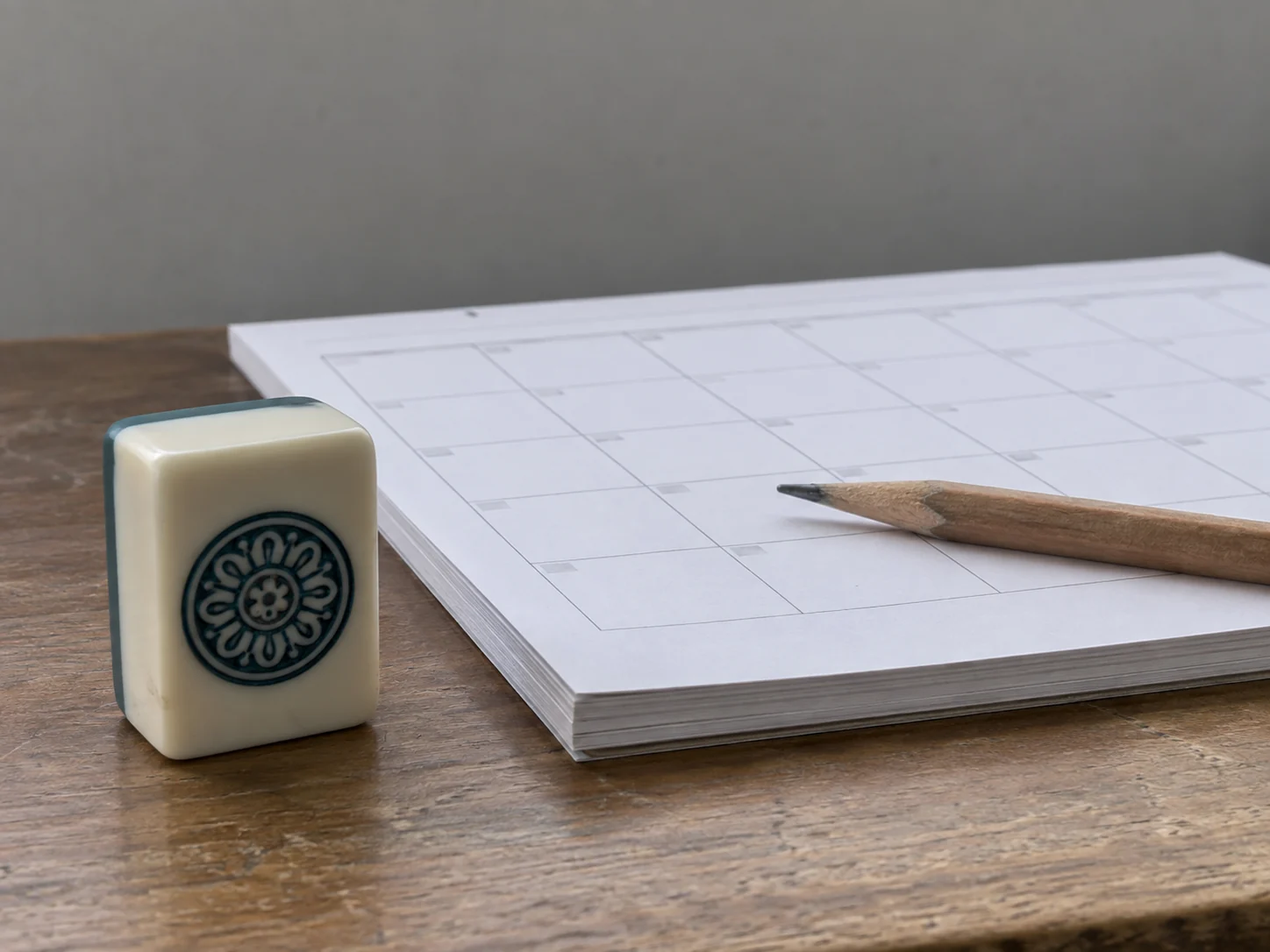
AI-assisted illustrative scene; not an inventory diagram or a customer endorsement. Finished specifications require sample approval.
- 01Define quantity
- 02Plan sampling
- 03Approve production
- 04Allow for transit
Choose the range before choosing the quantity
A first order begins with a product scope. A base-range order uses an agreed existing design and configuration. A custom tile project can change the front artwork, back artwork and dimensions; accessories support color customization. Those decisions change what must be prepared, reviewed and approved. A buyer comparing quotations should therefore send the same product list, design count and intended color allocation to each supplier. A headline MOQ without that scope is not enough to compare the offers.
What 100 pieces and 100 pieces mean
Our published base MOQ is 100 pieces. Custom MOQ is 100 pieces, with the exact requirement confirmed against the project. Do not assume that a 300-set custom minimum can be divided into many different colors or artwork files. Ask for the allocation in writing. Also define the unit: one tile set, one four-rack set and one bag are different products. A coordinated collection needs a component quantity list so its ordering units remain clear.
Build a schedule with separate stages
The sampling allowance is 25–30 days; custom production is 30–40 days. If these stages run sequentially, the two stated allowances add to 55–70 days. That arithmetic is a planning scenario, not a guaranteed order-to-door promise. Artwork preparation, revisions, approval delays, freight, customs clearance and local delivery are outside that simple sum. Confirm the sample start trigger, the production start trigger and the dispatch target in the accepted quotation.
Make sample approval a decision, not a formality
Review the sample as a full collection. Count the tiles, compare the front artwork with the approved proof and check that the backs are consistent. Place tiles on the intended racks, move them on the mat and load the bag or box. Record the approved dimensions and color references. If a detail changes, keep a revised approval record so a later production instruction does not accidentally use an earlier design.
Send a brief that can be quoted
Include the category list, quantities by design, tile dimensions if custom, artwork status, accessory colors and delivery destination. State whether chips, dice and the instruction booklet belong in the requested kit. Request separate sample, goods, packaging and freight lines. This makes the next conversation about concrete decisions instead of a vague request for a low price. For a first collection, fewer coordinated variants can make the approval and allocation process easier to manage.
Build a schedule around approvals
Write down the brief date, artwork confirmation, sample review and bulk approval as separate milestones. A planning window is meaningful only when its start conditions are known. Ask how changes affect the schedule and who must approve the final version. Do not combine sampling, production and international transit into a single promised arrival date.
If a retailer has a fixed launch event, share that requirement at the start. The supplier can then assess the scope against the target rather than discovering the deadline after the sample is revised. Keep the resulting dates in the quotation or project record.
Clarify the minimum before allocating colors
The current confirmed minimum across the range is 100 pieces, with mixed colors supported. State the product and pack unit so a quantity is not confused with the number of tiles inside a set. Send the color split and selected variants together. A minimum quantity does not specify everything about the order.
Sample fees, freight, credits, revision allowances, payment methods and deposits are available by inquiry. Record those answers before committing to a purchasing calendar. A timetable based on assumed fees or unlimited revisions is not a reliable launch plan.
KEEP THIS CHECKLIST
- Select base or custom range
- Specify quantity per design and color
- Confirm sample and production start triggers
- Add transit and approval time to the schedule
- Approve the complete collection in writing
Sources & context
- Factory ordering scope: MOQ, customization, samples and shippingFactory terms confirmed by the owner on 10 September 2026 · Accessed 2026-09-11
- Factory production and assembly photographsFactory-supplied process photography · Accessed 2026-09-11
Forum excerpts are qualitative feedback. Product specifications describe linked products only. Recommendations are editorial judgments, not lab results or statistical popularity rankings. Editorial policy.